Arakan Army Accused of Raping and Detaining Rohingya Returnees
Dozens of Rohingya families who returned to their homes in Maungdaw Township after the Arakan Army (AA) seized control of the area have endured arbitrary detention, systematic rape, torture, and extortion at the hands of the ethnic armed group, survivors have told.
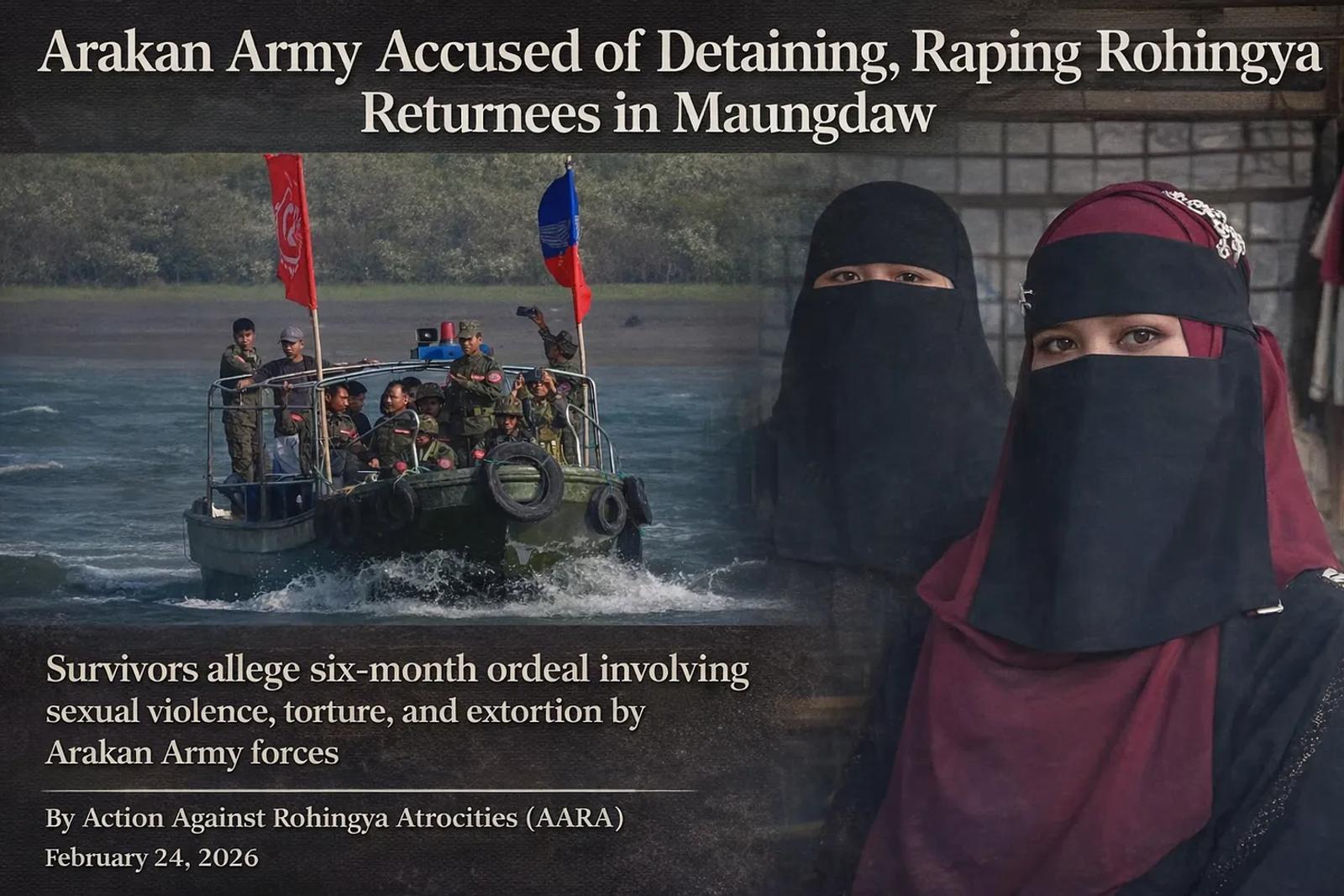
MAUNGDAW, Rakhine State; Dozens of Rohingya families who returned to their homes in Maungdaw Township after the Arakan Army (AA) seized control of the area have endured arbitrary detention, systematic rape, torture, and extortion at the hands of the ethnic armed group, survivors have told.
According to harrowing firsthand accounts, approximately 180 individuals from 39 Rohingya families,including women and young children, were detained for over six months at the Maungdaw Town Police Station, which is now under AA control. Multiple survivors reported that AA soldiers raped several women during their confinement and subjected detainees to daily physical abuse, forced labor, and food deprivation.
The allegations paint a disturbing picture of how the AA, which presents itself as an alternative to the military junta, is treating the Rohingya minority in areas it now governs.
We Had Permission to Return
The families had fled previous waves of violence and sought refuge in Bangladesh. After AA captured Maungdaw in December 2024, they followed established procedures to return home.
We contacted our village administrators and requested permission to come back," one released detainee told, speaking on condition of anonymity due to security concerns. "The administrators submitted our request to the AA zone office with detailed information about our families. The zone commander approved our application.
The families returned from Bangladeshi refugee camps on June 8, 2025, two days after Eid. Their homecoming would last barely 24 hours.
Detention and Abuse
The day after their arrival, AA forces summoned the family heads for questioning. Instead of a brief interview, all 39 families were transported to an AA camp and subsequently transferred to the Maungdaw Town Police Station.
After 15 days, all of us, including the women and children, were sentenced to three months in prison," another survivor recounted. The charge: illegal border crossing.
Conditions inside the detention facility were brutal. Guards separated men from women and prohibited any contact between them.
Men were tortured and forced to work daily," a former detainee said. "Food was insufficient. But worse, women were raped by AA soldiers inside the camp. They physically assaulted them."
The survivors described an atmosphere of complete impunity, with detainees powerless to resist or report the abuses occurring around them.
Extortion and Deportation
As detainees completed their sentences, the AA imposed a heavy financial toll for freedom.
Later, the AA took 200,000 Myanmar Kyat from each individual, one survivor said. "Some were released after 45 days, others after 90 days. Then they put us on boats they arranged and sent us directly back to Bangladesh."
Before deportation, AA officials threatened the released detainees with severe consequences if they spoke about their experiences.
"They told us not to tell anyone," the survivor
added.
Discriminatory Justice?
The 39 families originated from across Maungdaw Township:
· Kanyin Tan ward: 5 families
· Maung Ni village: 4 families
· Ward 5: 2 families
· Pan Taw Pyin: 10 families
· Shwe Zar: 17 families
· Nyaung Chaung village: 1 family
While most were eventually deported, three household heads from Kanyin Tan ward remain in AA custody facing far more serious charges.
According to local sources, the AA arrested Mohammad Ayaas from his home on December 14, 2025, and two other Rohingya men, including a driver named Mohammad Enous, on December 16. All three had been living peacefully in their homes for over three months before the arrests.
The AA has charged them under the Unlawful Immigration Act, a case that could result in five-year prison sentences for each man.
Local residents noted the disparity in treatment. While the ULA/AA's own legal code prescribes only six months' imprisonment under Section 13/1 for illegal border crossing, an AA official reportedly stated that Rohingya defendants now face five-year sentences under the group's administration, a significant escalation from the six-month sentences previously imposed by the military junta.
Echoes of the Past
For the Rohingya community, the AA's actions represent a disturbing continuity.
Throughout history, successive Burmese military dictatorships have subjected Rohingya people to discriminatory, inhumane treatment," one community member said. "Now the ULA/AA is implementing the same approach.
The allegations come at a time when the AA is consolidating control over large swaths of Rakhine State and seeking international legitimacy. The group has positioned itself as a champion of ethnic Rakhine interests but has faced mounting criticism over its treatment of the Rohingya minority.
Voices of Survivors
One detainee who experienced the entire six-month ordeal described the psychological toll of the experience.
When we finally returned to Bangladesh on AA boats, we had nothing," he said. "They took our money, our dignity, our safety. They took everything except our will to survive and tell us what happened."
Another survivor, a woman who witnessed the sexual violence inflicted on fellow detainees, spoke through tears.
They told us we would be safe if we followed their rules. Instead, we were violated in ways I cannot describe. Some of the women will carry this trauma forever.
Context and Concerns
Maungdaw, a coastal town near the Bangladesh border, has been a flashpoint in Rakhine State's complex ethnic and religious tensions for decades. The Rohingya, a predominantly Muslim minority, have faced systematic persecution in Buddhist-majority Myanmar, with hundreds of thousands fleeing to Bangladesh following military crackdowns in 2017.
The AA's capture of Maungdaw in late 2024 marked a significant shift in control from the central government to the ethnic armed group. Initially, AA officials signaled a more organized approach to returns, first allowing Rakhine residents back in January 2025, then gradually permitting Rohingya returns starting in April.
But the treatment of these 39 families suggests that, for Rohingya returnees, the change in authority has not brought improved safety or rights.
Conclusion
The testimonies gathered by AARA reveal a pattern of serious human rights abuses committed by AA forces against Rohingya civilians who sought only to return to their homes. The allegations of rape, one of the most grave violations in any conflict, demand urgent investigation and accountability.
Yet survivors remain terrified of reprisals. Most spoke only on condition of anonymity, fearing that any public identification could endanger relatives still in AA-controlled areas or invite retaliation if they themselves are forced to return to Myanmar in the future.
As the AA consolidates its governance over Rakhine State, these accounts raise fundamental questions about the group's commitment to protecting all civilians under its control, regardless of ethnicity or religion.
For the 39 families who trusted the AA's permission to return home, that trust was met with detention, abuse, and deportation. Their stories stand as a warning to other Rohingya contemplating returns: permission may not equal protection.
Latest news

AARA Alleges 51 Rohingya Civilians Detained, Elderly Man Killed in Rathedaung Township by Militant Arakan Army (AA)
Rohingya villagers face urgent concerns over a reported deadline imposed by the militant Arakan Army (AA) to leave their homes by October 17, 2026, raising fears of further displacement and loss of shelter.

1,500 Myanmar Nationals Deported from Malaysia Aboard Junta Warships Amid Airstrike Horror
Malaysia has begun deporting around 1,500 Myanmar nationals despite ongoing conflict, forced conscription risks, and warnings that safe and dignified return remains impossible.
August 25 and the Hindu Massacre Narrative: How the Arakan Army Is Shifting Blame Toward Rohingya and ARSA
The article examines how the Arakan Army's August 25, 2026 Hindu commemoration presents the 2017 Hindu massacre as an ARSA crime, raising questions over efforts to shift blame onto Rohingya and reshape the history of the Rohingya genocide.