
A Sea of Tears: Unpacking the Organized Trafficking Network Behind Myanmar's Deadliest Maritime Disaster
In July 2026, more than 500 Rohingya were feared dead after two overcrowded boats sank in the Bay of Bengal while attempting to reach Malaysia. This investigation examines the organized human trafficking network behind one of the deadliest maritime disasters involving the Rohingya in recent years. It traces the trafficking route from refugee camps in Bangladesh through Rakhine State to the Andaman Sea, exposing the roles of traffickers, local brokers, and armed actors, as well as the systematic extortion imposed on desperate refugees. The report also analyzes the worsening humanitarian conditions—including aid cuts, escalating conflict, and continued persecution—that are driving increasing numbers of Rohingya to undertake these dangerous journeys. It concludes with an urgent call for coordinated international action to dismantle trafficking networks, expand safe and legal migration pathways, strengthen search-and-rescue efforts, and address the root causes of forced displacement.
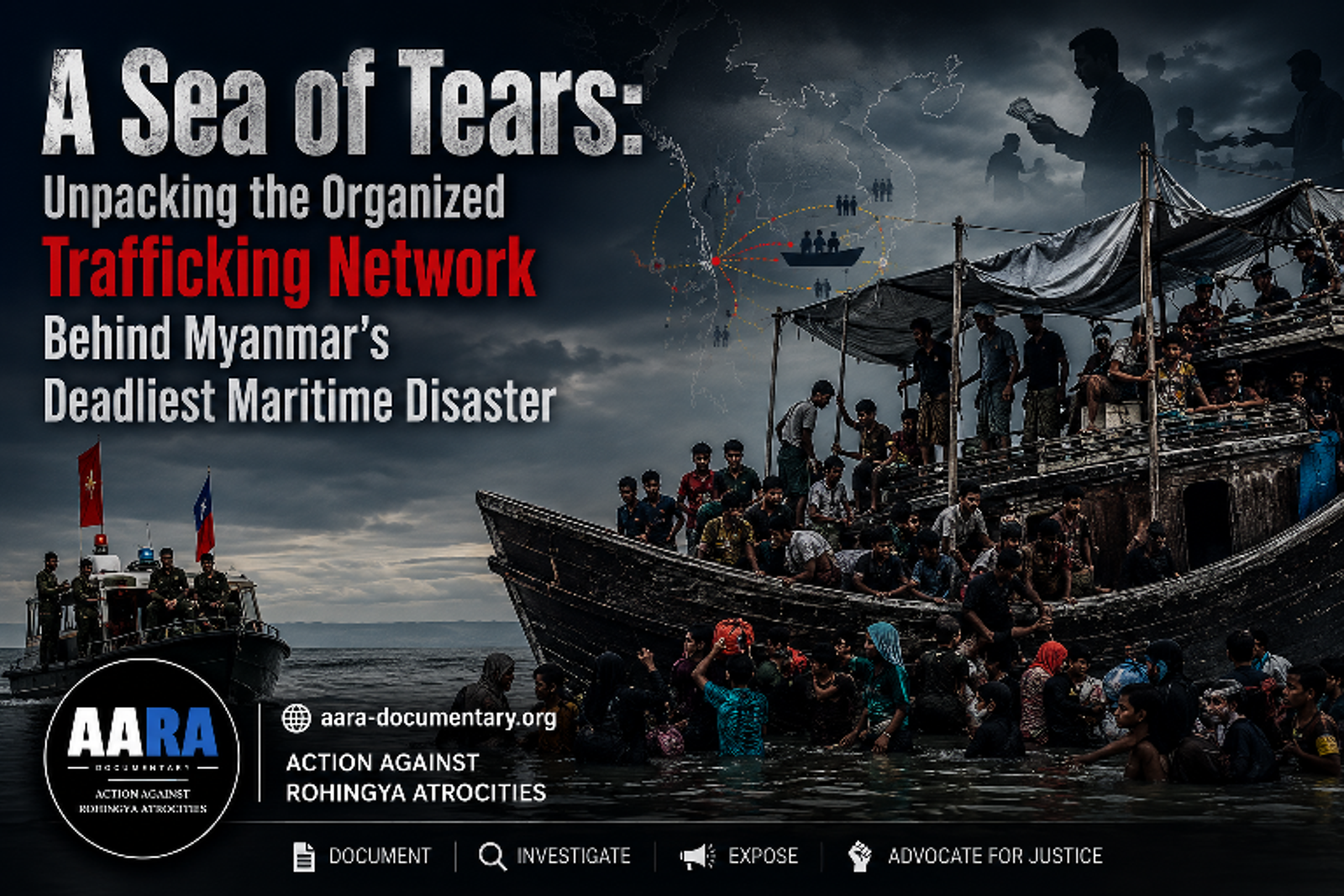
July 2026 — The Bay of Bengal has once again become a graveyard for Rohingya dreams. More than 500 people are feared dead after two overloaded motorboats carrying members of Myanmar's persecuted Rohingya minority capsized off the country's coast in late June and early July 2026. The twin tragedies, which mark one of the deadliest maritime disasters involving the stateless community in recent years, expose the sophisticated and brutally efficient human trafficking infrastructure that has turned the Andaman Sea into a lucrative and lethal highway for organized crime.
The Latest Tragedies
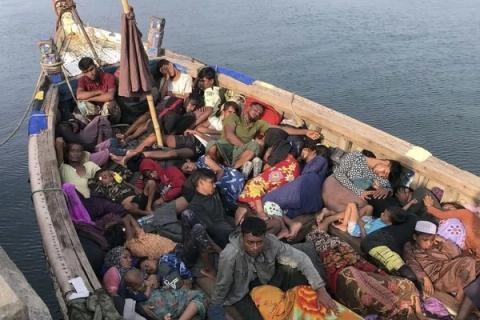
According to a joint statement from the International Organization for Migration (IOM) and the UN High Commissioner for Refugees (UNHCR), the two vessels departed from Myanmar's western Rakhine State in late June. The first boat, carrying approximately 250 people, lost contact shortly after departure. A second vessel, reportedly with 280 passengers on board, is believed to have sunk off Myanmar's Ayeyarwady coast on July 8.
The second boat had departed from Sin Taik Maw village in Pauktaw Township on June 29 and was heading for Malaysia when it capsized near the Irrawaddy Sea. Fishermen from Ye Town and Mawlamyine in Ayeyarwady Region reportedly saw numerous bodies floating at sea. Passengers included Rohingya from refugee camps in Bangladesh as well as from Maungdaw, Buthidaung, Rathedaung, Sittwe, Kyauktaw, Mrauk-U, and Minbya townships in Rakhine State.
"While the incidents and casualty figures have yet to be officially confirmed, UNHCR and IOM are gravely concerned by the potentially devastating loss of life," the agencies said, urging immediate search-and-rescue operations.
The Organized Trafficking Network and the Deadly Corridor
These tragedies are not random accidents; they are the predictable outcomes of a transnational criminal enterprise that preys on desperate populations. The trafficking route, a multi-stage corridor stretching from overcrowded refugee camps in Bangladesh to the coastlines of Malaysia, is meticulously controlled by a coalition of local brokers, boat owners, and armed actors.
The Actors
Both sunken boats belonged to a major human trafficker known as Maung Ni, a Sittwe native now residing in Yangon. According to investigative sources, he collaborates directly with Second Lieutenant Kyar Lwar, the Arakan Army's (AA) Ponnagyun office in-charge, to conduct large-scale human smuggling operations. This nexus between criminal brokers and armed ethnic groups has transformed trafficking into a systematic revenue stream, protected and facilitated by military leverage.
The Trafficking Route: A Step-by-Step Corridor of Exploitation
The Rohingya maritime trafficking corridor follows a harrowing, multi-phase journey, as detailed by ground-level investigators and survivor accounts:
- Recruitment in Bangladesh Camps: The journey begins in the sprawling refugee camps of Cox's Bazar, Bangladesh, home to nearly 1 million stateless Rohingya. Local sub-brokers, acting as recruiters, infiltrate the camps and promise safe passage to Malaysia. Migrants willing to embark are typically charged an initial recruitment fee of approximately 5,000 Bangladeshi Taka (BDT) (roughly $45 USD) to secure their place on the list.
- Consolidation and Transit to Teknaf: Once recruited, the traffickers consolidate the migrants from various camps and transport them to the coastal town of Teknaf, Bangladesh's southernmost point. This serves as the primary staging area for the maritime crossing.
- Maritime Entry into Myanmar – Shamila (Thame Hla): Under the cover of darkness, the traffickers load the migrants onto smaller vessels and depart from Teknaf's shore for Shamila (locally known in Burmese as Thame Hla village) in Rathedaung Township, Rakhine State, Myanmar. This village serves as the primary entry point and the most critical initial transit hub for the entire smuggling operation.
- The Hub of Shamila and Financial Extraction: Upon arrival in Shamila, the primary trafficking chiefs, including Maung Ni's associates, take a substantial 30% commission from the passengers' total fees, or the equivalent charter cost of the main vessel. This is where the financial transactions of the smuggling enterprise are largely settled.
- Overland Transfer to Sin Taik Maw (Pauktaw): From Shamila, the migrants are moved along the Rakhine coast to Sin Taik Maw village in Pauktaw Township. Here, in sprawling factory compounds controlled by the Arakan Army, the passengers are held until the traffickers have gathered a full consignment of at least 200 to 250 people. During this period, migrants are sometimes detained for up to two to three months under squalid conditions.
- The Arakan Army Tax and Final Departure: Before the migrants are permitted to board the main vessel for the open ocean, the Arakan Army conducts a mandatory census and levies a transit tax. Officials demand 1 million Myanmar Kyat (MMK) (approximately $300 USD) per passenger to Lieutenant Kyar Lwar's office. Only after this extortionate payment is extracted do the heavily overloaded vessels depart from Sin Taik Maw into the Bay of Bengal, aiming for the Malaysian coast via the treacherous Andaman Sea.
- The Final Destination: The ultimate goal is to reach the southern Thai coast or Malaysian waters. Upon arrival on the Thai side, survivors are forced to pay an additional 10 to 12 million MMK (between $3,000 and $3,600 USD) per person, a debt that often binds them to further exploitation or forced labor.
U Myo Myint, head of the Myanmar Human Rights and Development Council (MHRDC), which is investigating the trafficking operation, confirmed these financial structures to AARA.
The Arakan Army's Role and Forced Departures
Investigative sources reveal a chilling detail: the boat captain repeatedly warned the traffickers that sailing was impossible due to severe weather conditions. However, under extreme pressure and threats from Maung Ni and Second Lieutenant Kyar Lwar, the vessel was ordered to depart anyway. Human Rights Watch has previously documented that the AA and other armed groups operating in Rakhine State profit directly from the exodus by acting as de facto gatekeepers, taxing human cargo as they would any other commodity.
The Economics of Desperation: Why Now?
Rohingya typically avoid such boat journeys during the monsoon season due to deadly sea conditions. However, the factors pushing Rohingya to take these grave risks are intensifying:
- Aid Cuts: Steep reductions in foreign aid by the US and other international donors have led to severe ration cuts in Bangladesh's refugee camps, leaving families with little to survive on.
- Escalating Conflict: The ongoing civil war in Myanmar particularly the fierce fighting between the military junta and the Arakan Army in Rakhine State has made the region increasingly unstable and unsafe.
- Diminishing Opportunities: "Limited assistance and opportunities" in the camps have convinced increasing numbers that languishing in limbo is more dangerous than facing the open sea.
- Persistent Persecution: With no legal pathway to return to Myanmar safely or resettle elsewhere, the sea remains the only perceived escape route.
A Grim and Growing Pattern
The July 2026 tragedies are far from isolated. Over 6,500 Rohingya fled by boat in 2025, with nearly 900 reported dead or missing, making it the deadliest year on record. Before these latest twin sinkings, nearly 300 people had already been reported missing or drowned in the Andaman Sea and Bay of Bengal in 2026.
The UNHCR has called on nations to step up search and rescue efforts, stating that "saving lives and rescuing those in distress at sea is a humanitarian imperative and a longstanding duty under international maritime law." The agency also noted that the mortality rate for Rohingya sea journeys is the highest of any major refugee and migrant sea route in the world.
Conclusion
As the bodies of the victims continue to wash ashore along Myanmar's coast, the world is once again confronted with the brutal reality of the Rohingya crisis. The back-to-back sinkings serve as a devastating autopsy of a failed international response, where desperation is monetized, armed groups profit from misery, and traffickers operate with impunity.
A Rohingya activist stated:
"These capsizings highlight the extreme danger posed by traffickers who lure victims with promises of a better future. This threat is deeply terrifying for the Rohingya community."
Until comprehensive measures are taken to dismantle these trafficking networks, provide safe legal pathways, and restore stability, Sin Taik Maw Island, and the dark waters of the Bay of Bengal will remain final resting places for those who had nowhere else to go.
Related articles
Latest news
August 25 and the Hindu Massacre Narrative: How the Arakan Army Is Shifting Blame Toward Rohingya and ARSA
The article examines how the Arakan Army's August 25, 2026 Hindu commemoration presents the 2017 Hindu massacre as an ARSA crime, raising questions over efforts to shift blame onto Rohingya and reshape the history of the Rohingya genocide.
Arakan Army’s Digital Propaganda Campaign Targets Rohingya Identity and Abuses, Analysis Finds
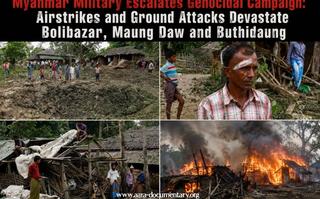
Myanmar Military Escalates Genocidal Campaign: Airstrikes and Ground Attacks Devastate Bolibazar and Buthidaung
On 1 July 2026, the Myanmar military launched coordinated airstrikes and ground attacks targeting Rohingya civilian areas in Maungdaw and Buthidaung townships, Rakhine State. The attacks struck Bolibazar village and several locations in Buthidaung, injuring civilians, including a child who lost a leg. **Action Against Rohingya Atrocities (AARA)** condemns these attacks as serious violations of international humanitarian law and calls for an immediate end to military operations against civilians, stronger international action, and unrestricted humanitarian access to affected communities.
