August 25 and the Hindu Massacre Narrative: How the Arakan Army Is Shifting Blame Toward Rohingya and ARSA
The article examines how the Arakan Army's August 25, 2026 Hindu commemoration presents the 2017 Hindu massacre as an ARSA crime, raising questions over efforts to shift blame onto Rohingya and reshape the history of the Rohingya genocide.
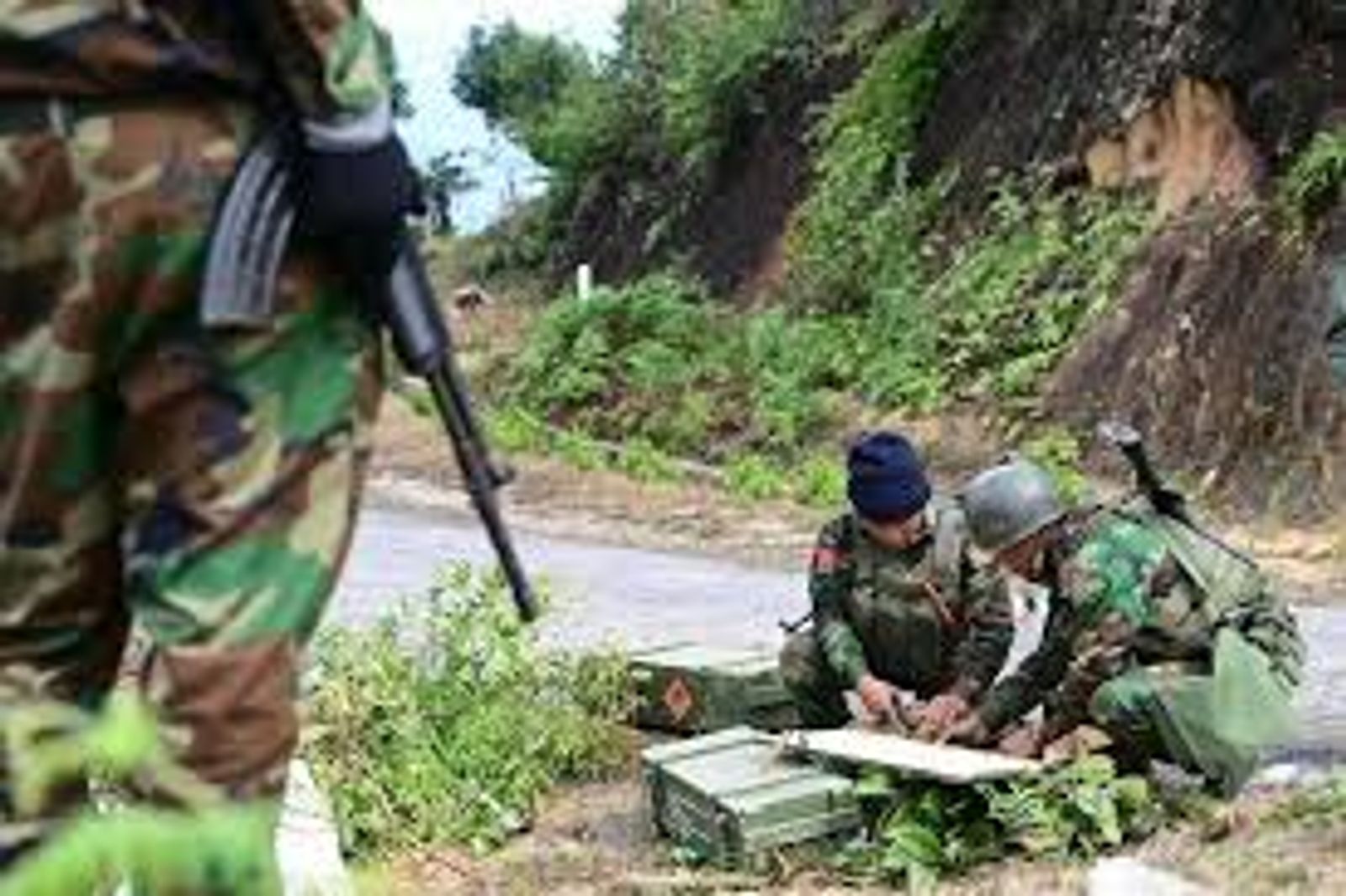
August 25, 2026 marked nine years since the Myanmar military's 2017 genocide against the Rohingya, a campaign of mass killings, village destruction, persecution and forced displacement that drove more than 740,000 Rohingya into Bangladesh. Across the world, Rohingya communities continue to observe August 25 as a day of remembrance for the victims of that genocide.
This year's anniversary, however, was accompanied by a new and highly controversial narrative promoted by the militant Arakan Army (AA).
The AA organized a commemorative event with members of the Hindu community in Arakan State and presented August 25 as a day to remember Hindus allegedly massacred by the Arakan Rohingya Salvation Army (ARSA).
The timing is significant. For nine years, August 25 has been observed by Rohingya communities as Rohingya Genocide Remembrance Day. The Hindu community had not previously observed the date as an annual remembrance of an alleged ARSA massacre. The emergence of this new narrative after the AA gained territorial control raises concerns that the tragedy of Hindu victims is being used to redirect responsibility for the violence of 2017 toward the Rohingya.
The Claim That Needs Examination
The narrative promoted around the AA's August 25 event centers on the claim that 99 Hindus were killed by Rohingya Muslims or ARSA on August 25, 2017.
The deaths of Hindu civilians should never be dismissed. Their families deserve justice, and the circumstances of their deaths should be investigated independently.
But an important question remains: why is this particular account now being placed at the center of August 25 remembrance, and on what evidence is responsibility being assigned to Rohingya or ARSA?
For Rohingya survivors, August 25, 2017 remains inseparable from the mass violence unleashed by the Myanmar military across northern Arakan State. Thousands of Rohingya were killed, villages were destroyed and hundreds of thousands were forced from their homes.
At the time, Rohingya communities were living under severe restrictions. Movement was heavily controlled, access to basic necessities was restricted, and ordinary civilians had virtually no military capacity comparable to the heavily armed Myanmar military.
Many survivors recall that even basic household items were restricted. Against this background, portraying the wider Rohingya population as capable of carrying out a large-scale massacre requires far more than an allegation repeated through political channels.
Hindu Survivor Accounts
Recent reporting has added another important dimension to the debate.
In a report by Arakan Times, journalist Saiful Arakani interviewed Hindu refugees in the Kutupalong camp about the violence they experienced in 2017. According to the report, the interviewed survivors did not blame Rohingya Muslims for the killings. Their accounts instead pointed toward the Myanmar military when describing the persecution and killings they experienced.
These accounts directly challenge the narrative that has recently been placed around August 25.
They do not mean that every question surrounding the Hindu killings has been conclusively resolved. Rather, they demonstrate why survivor testimony must be taken seriously and why responsibility should not be declared on the basis of politically promoted narratives alone.
The Hindu victims deserve an investigation capable of establishing who killed them and under what circumstances.
What About the IIMM?
The United Nations Independent Investigative Mechanism for Myanmar (IIMM) has an important role in this unresolved question.
The IIMM has not established that ARSA committed the alleged Hindu massacre simply because the allegation has been repeatedly circulated.
Its work involves collecting, preserving and analyzing evidence concerning serious international crimes in Myanmar. That includes examining evidence relating to different armed and military actors.
The question therefore remains open to investigation: were the original allegations against ARSA supported by reliable evidence, or could some of the claims have been part of an effort to attribute crimes committed during the 2017 violence to Rohingya or ARSA?
That question should be answered through evidence and independent investigation, not political narratives.
A New Commemoration After Nine Years
The timing of the new Hindu-focused commemoration is difficult to overlook.
For nine years, Rohingya communities have marked August 25 as the anniversary of the genocide and mass displacement of 2017. There was no comparable annual observance presenting the date as an ARSA-led Hindu massacre remembrance.
The emergence of this framing after the AA established control over large areas of Arakan State therefore deserves scrutiny.
The issue is not whether Hindu victims should be remembered. They absolutely should.
The issue is whether their suffering is being turned into a political narrative designed to shift blame for the events of 2017 onto Rohingya Muslims and ARSA.
Hindu victims deserve remembrance without their tragedy being used to erase the suffering of Rohingya victims.
The Role of Propaganda
The new narrative has also been amplified through media platforms and information networks supportive of the Arakan Army, including Global Arakan Network, Narinjara and Development Media Group.
The wider information struggle surrounding Arakan State has previously been examined by independent researchers, including the Washington-based Jamestown Foundation, which has documented aspects of the Arakan Army's information and political strategy.
In an environment where independent access to conflict-affected areas remains severely limited, control over information can have a major influence on how historical events are understood.
That makes independent reporting, survivor testimony and evidence-based investigation especially important.
The Myanmar Military's Parallel Narrative
The Myanmar military is also promoting its own version of August 25.
Through its diplomatic and social-media messaging, including the "Myanmar Mission Geneva" Facebook page, the military rejects Rohingya Genocide Remembrance Day and emphasizes the attacks carried out by ARSA against military positions on August 25, 2017.
Its messaging also continues to refer to Rohingya as "Bengalis."
This framing redirects attention toward ARSA's attacks while minimizing the mass killings, destruction and forced displacement suffered by Rohingya civilians during the Myanmar military's 2017 campaign.
The two narratives are politically different, but both contribute to a broader struggle over the meaning of August 25 and the historical responsibility for the crimes committed against the Rohingya.
Hindu Victims Must Not Become a Tool Against Rohingya
There should be no dispute over whether Hindu victims deserve justice.
They do.
Their deaths should be documented, their families heard and those responsible held accountable.
But accountability for Hindu victims does not require collective blame against the Rohingya. Nor should an allegation against ARSA be treated as proven without independent evidence.
The same principle must apply to the Rohingya genocide.
Remembering Rohingya victims does not mean ignoring crimes against Hindu civilians. It means demanding a truthful historical record for every victim and identifying perpetrators based on evidence.
Conclusion
The August 25, 2026 event organized by the Arakan Army has opened a new chapter in the struggle over the historical narrative of 2017.
By presenting the date through a Hindu massacre narrative and attributing responsibility to ARSA, the AA is shifting the focus away from Rohingya Genocide Remembrance Day and toward allegations against Rohingya Muslims and their armed organization.
Recent Hindu survivor accounts reported by Arakan Times raise serious questions about that narrative. The absence of an established IIMM finding holding ARSA responsible also underscores the need for independent investigation rather than political attribution.
Meanwhile, the Myanmar military continues to promote its own narrative centered on ARSA's attacks while rejecting the Rohingya genocide framing of August 25.
The Hindu massacre deserves truth.
The Rohingya genocide deserves truth.
Neither tragedy should be rewritten to serve the interests of armed actors.
August 25 should remain a day to remember the victims, preserve historical evidence and demand accountability, not a platform for shifting responsibility onto the Rohingya.
Related News
Latest news

AARA Alleges 51 Rohingya Civilians Detained, Elderly Man Killed in Rathedaung Township by Militant Arakan Army (AA)
Rohingya villagers face urgent concerns over a reported deadline imposed by the militant Arakan Army (AA) to leave their homes by October 17, 2026, raising fears of further displacement and loss of shelter.
1,500 Myanmar Nationals Deported from Malaysia Aboard Junta Warships Amid Airstrike Horror
Malaysia has begun deporting around 1,500 Myanmar nationals despite ongoing conflict, forced conscription risks, and warnings that safe and dignified return remains impossible.
August 25 and the Hindu Massacre Narrative: How the Arakan Army Is Shifting Blame Toward Rohingya and ARSA
The article examines how the Arakan Army's August 25, 2026 Hindu commemoration presents the 2017 Hindu massacre as an ARSA crime, raising questions over efforts to shift blame onto Rohingya and reshape the history of the Rohingya genocide.