Rohingya Under Law and Force: History, Citizenship and the Continuing Crisis in Rakhine State
This article examines the historical roots of Rohingya displacement, discriminatory citizenship laws, continuing human rights violations in Rakhine State, and the pursuit of international justice. It highlights the importance of legal recognition, civilian protection, accountability, and guarantees for safe, voluntary, and dignified Rohingya repatriation.
Introduction
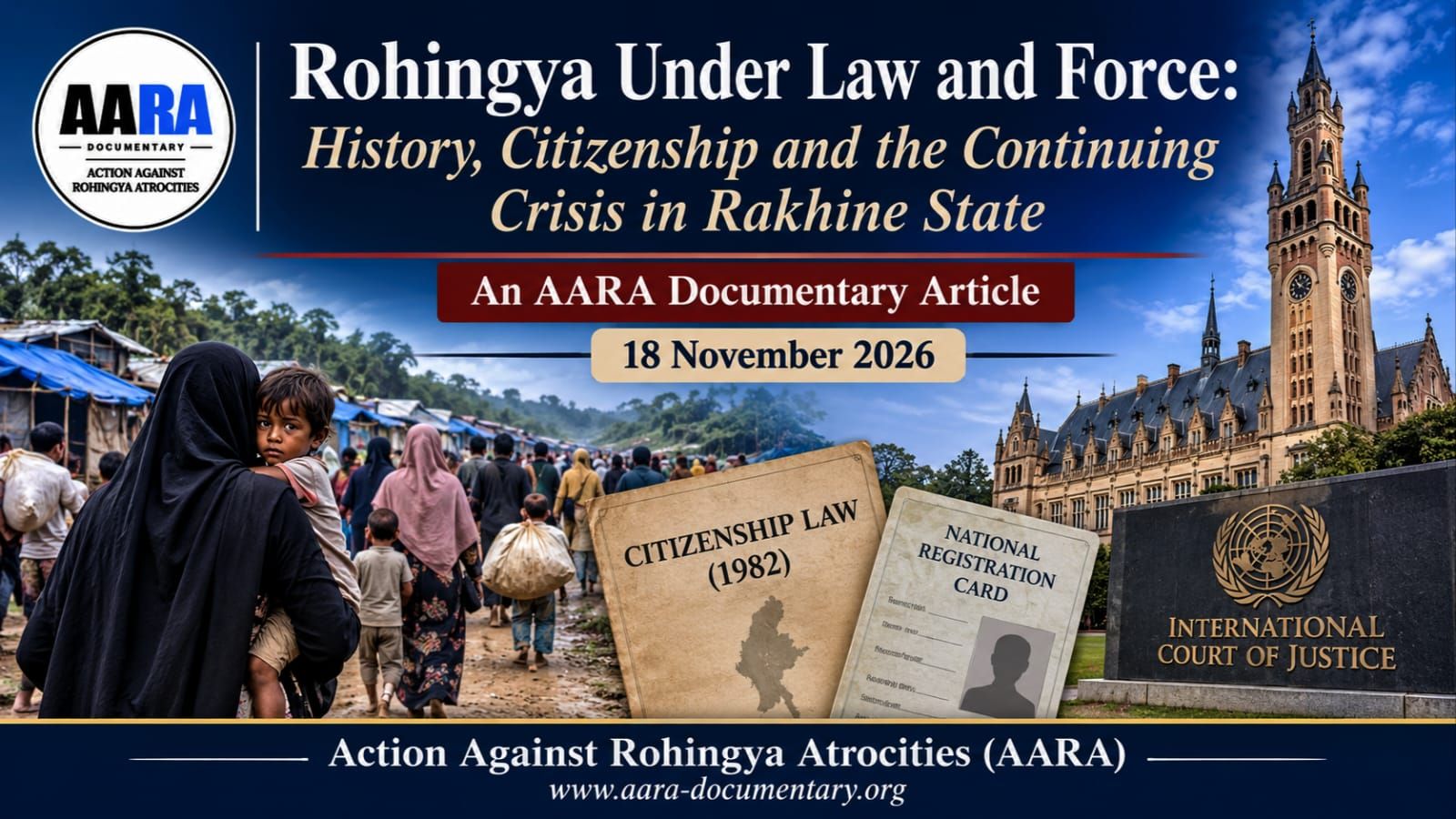
For decades, the Rohingya people of Rakhine State, Myanmar, have faced displacement, restrictions on fundamental rights, contested citizenship status and recurring violence. Their crisis cannot be understood solely as a consequence of recent armed conflict. It is also rooted in a long history of political exclusion, discriminatory administration and the denial of equal legal recognition.
As the International Court of Justice (ICJ) prepares to deliver its judgment in The Gambia v. Myanmar on 19 November 2026, the international community has an important opportunity to reflect on the historical and legal circumstances surrounding the Rohingya crisis. This article presents a concise documentary overview of that background, the reported violations and the conditions necessary for a safe and dignified future.
A History of Displacement and Exclusion
The history of Rohingya displacement predates the events of 2017. The 1977–1979 Operation Nagamin, commonly known as Operation Dragon King, was followed by the flight of approximately 200,000 Rohingya to Bangladesh. A further large-scale exodus occurred in 1991–1992, when approximately 250,000 Rohingya fled amid reports of serious abuses.
In 2012, intercommunal violence in Rakhine State resulted in widespread displacement and prolonged confinement for many Rohingya. Human Rights Watch documented serious abuses and the authorities’ failure to protect affected communities.
On 25 August 2017, attacks by the Arakan Rohingya Salvation Army (ARSA) were followed by Myanmar military operations. Approximately 700,000 Rohingya fled to Bangladesh amid widespread reports of killings, sexual violence, village destruction and other serious violations. The attacks by ARSA do not justify collective punishment or violations against civilians.
The displacement and insecurity have continued. In September 2026, the Independent Investigative Mechanism for Myanmar (IIMM) reported that more than 154,000 Rohingya had crossed into Bangladesh since early 2024, while close to one million others remained unable to return safely. These figures are attributed to the IIMM and are not presented as independently verified AARA statistics.
Citizenship and the Legal Framework
A central issue underlying the Rohingya crisis is the denial or restriction of citizenship and legal identity.
Myanmar's 1949 registration framework established systems for documenting residents, but registration was not itself equivalent to citizenship. The 1982 Citizenship Law introduced three categories: citizenship, associate citizenship and naturalised citizenship. Its provisions established criteria for recognition and placed significant authority in the hands of state institutions to determine which ethnic groups qualified as national groups.
Although the law does not expressly name the Rohingya, its framework and subsequent administration have been widely identified by human-rights observers as central to the exclusion of many Rohingya from full citizenship and the resulting conditions of statelessness.
Identity documents have also played an important role. National Registration Cards, temporary registration documents commonly known as white cards, and National Verification Cards (NVCs) have had different legal and administrative functions. Temporary white cards were invalidated in 2015. NVCs are presented by Myanmar authorities as a verification mechanism, but they do not themselves confer citizenship. Rohingya communities and human-rights advocates have raised concerns about the process, including recognition of identity and the absence of a clear, equal pathway to citizenship.
The distinction is essential: possession of a registration or verification document should not be confused with recognition as a full citizen or enjoyment of equal rights.
Continuing Conflict and Reported Violations
The situation in Rakhine State remains deeply concerning. The United Nations Office of the High Commissioner for Human Rights, in its report published on 25 August 2026, described a deteriorating human-rights situation and reported abuses attributed to both the Myanmar military and the Arakan Army.
The IIMM's September 2026 statement also described its continuing efforts to collect and analyse evidence relating to serious international crimes in Myanmar. It reported drawing on more than 1,600 sources and over 750 witness testimonies. These are investigative findings and evidence-gathering activities, not judicial convictions.
AARA emphasises the importance of distinguishing between the conduct of armed actors and the identity of the wider communities among whom they operate. Allegations against the Myanmar military, the Arakan Army or ARSA must be assessed individually and through credible evidence. No civilian population should be held collectively responsible for the actions of an armed organisation.
The ICJ Case and the Responsibility of the International Community
On 11 November 2019, The Gambia instituted proceedings against Myanmar before the International Court of Justice under the Genocide Convention. On 23 January 2020, the Court indicated provisional measures requiring Myanmar to take steps to protect the Rohingya from acts covered by the Convention and to preserve relevant evidence.
The merits hearings took place from 12 to 29 January 2026. On 3 November 2026, the Court announced that it would deliver its judgment on 19 November 2026 at 10:00 a.m. Hague time.
At the time of this article's publication, the judgment remains pending. AARA is not a party to the proceedings, and this article does not anticipate or represent the Court's decision. The legal responsibility of Myanmar and the questions before the Court must be determined by the Court itself.
The proceedings nevertheless carry profound significance for the Rohingya people and for the international legal order. They place the prevention of genocide, the protection of vulnerable populations and the importance of accountability at the centre of international attention.
Return Must Be Safe, Voluntary and Dignified
Repatriation figures and administrative verification processes cannot, by themselves, establish that conditions are safe for return. The United Nations has continued to emphasise that conditions in Myanmar are not conducive to voluntary, safe, dignified and sustainable Rohingya return.
Any credible return process must address the underlying causes of displacement. This requires:
• Recognition of Rohingya identity and a genuine, equal pathway to citizenship.
• Freedom of movement and equal protection under the law.
•Access to education, healthcare, livelihoods and other essential services.
• Resolution of housing, land and property claims.
• Meaningful consultation with Rohingya communities, including women and young people.
• Independent monitoring of conditions before, during and after return.
• Accountability for serious violations and effective protection against renewed persecution.
Return must never be forced, rushed or treated as a substitute for addressing discrimination and insecurity. Refugees must be able to make informed decisions without intimidation or pressure.
Conclusion
The Rohingya crisis is not simply a question of displacement across an international border. It is a continuing struggle for legal identity, citizenship, security, dignity and equal protection. Historical displacement, discriminatory citizenship arrangements and recurring violence have created conditions in which millions of Rohingya have been denied the opportunity to live safely in their homeland.
As the ICJ prepares to deliver its judgment on 19 November 2026, AARA calls for continued international attention to the rights and protection of the Rohingya people. Whatever the outcome of the proceedings, lasting peace will require more than statements and repatriation plans. It will require genuine legal recognition, protection of civilians, accountability and practical guarantees that Rohingya can live with equality and dignity.
The future of the Rohingya must be built on rights, justice and protection, not on uncertainty, exclusion or forced return.
About AARA
Action Against Rohingya Atrocities (AARA) is a documentary and human-rights organisation focused on documenting reported violations affecting the Rohingya community and supporting efforts to preserve evidence, raise awareness and promote accountability.
Latest news
AARA Welcomes ICJ Final Judgment Finding Myanmar Military Committed Genocide Against Rohingya
Court orders Myanmar to stop violence, allow safe return, restore rights, pay compensation, and punish perpetrators
Habi Rahman: Nearly Five Years in Prison and a Long Journey to Reunite with His Wife
After nearly five years in prison and years of separation, 69-year-old Habi Rahman reunited with his wife in Bangladesh, carrying memories of loss and hope for a safe return home.
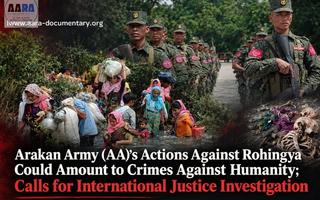
Arakan Army’s Actions Against Rohingya May Amount to Crimes Against Humanity
International human rights lawyer Ashley S. Kinseth argues that the Arakan Army’s restrictions, forced labor, taxation, and land confiscation targeting Rohingya warrant investigation as possible crimes against humanity, including ethnic persecution, and calls for greater international accountability.
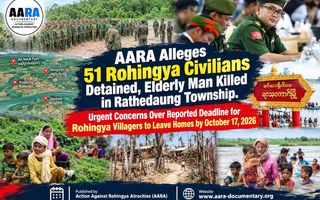
AARA Alleges 51 Rohingya Civilians Detained, Elderly Man Killed in Rathedaung Township by Militant Arakan Army (AA)
Rohingya villagers face urgent concerns over a reported deadline imposed by the militant Arakan Army (AA) to leave their homes by October 17, 2026, raising fears of further displacement and loss of shelter.