Weekly Situation Report: Airstrikes, Floods, and Boat Tragedies Deepen the Rohingya Crisis
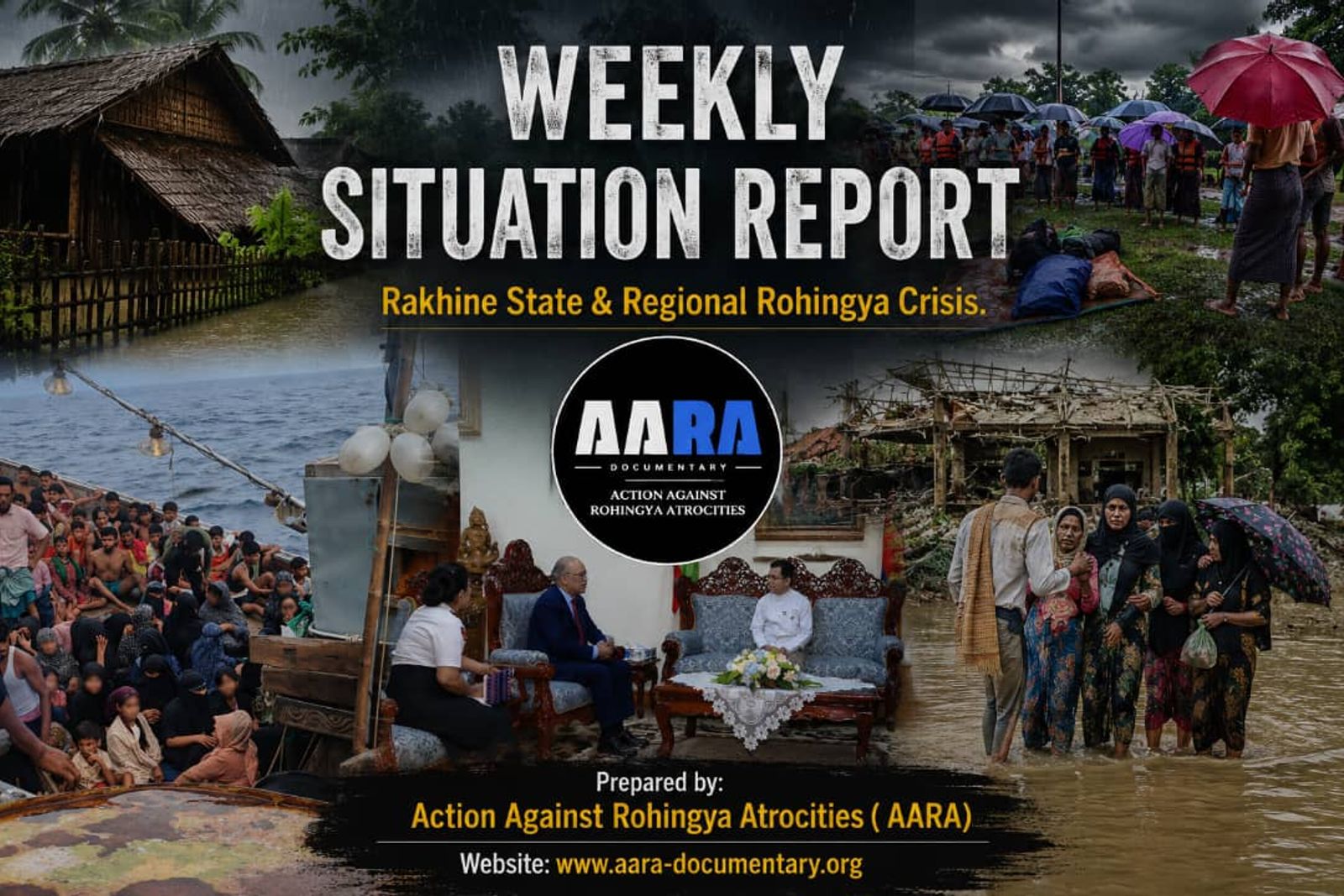
The week ending July 12, 2026 witnessed a worsening humanitarian and security crisis across Rakhine State and neighboring Bangladesh. Major developments included junta airstrikes, widespread flooding and landslides, two deadly boat sinkings that left more than 530 Rohingya feared dead, ongoing human trafficking concerns, and renewed Myanmar–Bangladesh repatriation discussions.
1. EXECUTIVE SUMMARY
The reporting period witnessed a severe escalation of crises across Rakhine State and neighboring Bangladesh. Key developments include: a major airstrike by the junta on an AA base; catastrophic flooding and landslides affecting over 22 villages in Rakhine and a refugee camp in Bangladesh; two deadly maritime disasters resulting in the presumed deaths of over 530 Rohingya; and high-level diplomatic talks between Myanmar and Bangladesh regarding repatriation.
2. SECURITY & MILITARY CONFLICT
Airstrike on Kyein Chaung Base (July 2):
- The AA/ULA reported that the Military Council conducted airstrikes on the Kyein Chaung military base in Maungdaw Township.
- The attack utilized two jet fighters and one Y-12 aircraft, dropping a total of 33 bombs (six 500-pound bombs and twenty-seven others) between 3:00 PM and 3:32 PM.
- Casualties: Four individuals were killed at the scene, including a Captain-rank officer who was a prisoner of war responsible for medical care, along with three other junta soldiers. Several buildings in the prison compound were destroyed, and a significant number of AA troops may have been affected.
3. HUMANITARIAN CRISIS: WEATHER, FLOODS & LANDSLIDES
Severe Flooding in Rakhine State:
- Continuous heavy rainfall since July 1 has caused the Letmway River to rise, submerging at least 22 villages in Minbya Township, including four Rohingya villages (Haraparaing, Let Taw Yay, Sambhalay, and Tan Seik).
- In Northern Maungdaw, heavy rains and strong currents have caused severe roadside erosion, landslides, and road damage, significantly hindering travel for locals.
- The AA/ULA has issued warnings for the public to exercise extreme caution, citing risks of flash floods, mudslides, and land collapses across Maungdaw, Buthidaung, Minbya, Kyauktaw, Pauk Taw, Mrauk-U, and Ponnagyun townships.
Landslide in Cox's Bazar Refugee Camp (Bangladesh):
- On July 8, a severe landslide struck Camp No. 5 in Cox's Bazar, trapping a girls' madrasa underground while students were studying.
- Casualties: A total of 14 people were rescued. However, 8 have died (including 3 children and 1 female religious teacher at the scene, and 4 others who died in hospitals). Six individuals remain hospitalized.
- Parents and camp leaders have criticized the religious teachers for not allowing students to return home despite the high-risk weather warnings, raising serious questions about disaster preparedness and student safety protocols in the camps.
4. MARITIME DISASTERS & HUMAN TRAFFICKING
- Overview: This week witnessed two catastrophic boat sinkings in the Bay of Bengal, resulting in the presumed deaths of over 530 Rohingya fleeing to Malaysia.
- Incident 1 (July 7):A boat carrying approximately 250 Rohingya departed Pauk Taw Township on July 7 but sank near Sittang Maw Island due to rough seas. All passengers are feared dead.
- Incident 2 (July 8): A second motorboat carrying approximately 280 Rohingya sank near the Ayeyarwady Sea. All passengers are presumed dead. Fishermen from Ye and Mawlamyine reported seeing numerous bodies at sea.
- Trafficking Network Exposed: Key Actors: The boats are reportedly owned by a major trafficker named Maung Ni (a Sittwe native residing in Yangon), who is collaborating with Dy. Kyaw Lar War (Deputy Battalion Commander and Arakan Army’s Ponnagyun office in-charge).
Modus Operandi:
- Brokers recruit Rohingya from Bangladesh camps and Rakhine townships (Maungdaw, Buthidaung, Rathedaung, Sittwe, Kyauktaw, Mrauk-U, Minbya).
- Migrants are held in AA-owned factories near Sittang Maw until a minimum of 200 people are gathered, sometimes for up to 2–3 months.
- Taxes: Passengers pay 1 million kyats to Dy. Kyaw Lar War upon reaching Sittang Maw, and an additional 10–12 million kyats upon reaching the Thai side.
- Negligence: Despite the boat captain repeatedly warning against departure due to severe weather, Maung Ni and Dy. Kyaw Lar War allegedly forced the boats to sail, leading to the tragedies.
- Outcry: A Rohingya activist stated that these tragedies highlight the terrifying dangers posed by traffickers luring desperate refugees with promises of a better future.
5. DIPLOMATIC ENGAGEMENTS
Myanmar-Bangladesh Repatriation Talks (July 9):
- Union Minister U Myint Kyaing (Myanmar) and Bangladeshi Ambassador Dr. Mohammad Monwar Hossain met in Nay Pyi Taw.
- Discussions focused on immigration procedures, visa matters, the status of border gates, and the repatriation of displaced persons from Rakhine State.
- Myanmar highlighted challenges in verifying the lists sent by Bangladesh and stressed the necessity for comprehensive documentation and evidence to be provided by Bangladesh to facilitate the repatriation process.
6. CONCLUSION & KEY CONCERNS
The week ending July 12 highlights a deeply concerning convergence of conflict, natural disasters, and human exploitation.
- Security: The junta's airstrikes indicate a worsening military situation in Rakhine.
- Weather Crisis: Heavy monsoon rains continue to devastate both Rakhine state and the Cox's Bazar camps, demanding urgent humanitarian response and better early-warning systems.
- Trafficking Crisis: The two boat tragedies, claiming over 530 lives, underscore the lethal consequences of the ongoing human smuggling networks operating with impunity and alleged complicity from armed groups. The forced departures despite severe weather point to a blatant disregard for human life.
Latest news
August 25 and the Hindu Massacre Narrative: How the Arakan Army Is Shifting Blame Toward Rohingya and ARSA
The article examines how the Arakan Army's August 25, 2026 Hindu commemoration presents the 2017 Hindu massacre as an ARSA crime, raising questions over efforts to shift blame onto Rohingya and reshape the history of the Rohingya genocide.
Arakan Army’s Digital Propaganda Campaign Targets Rohingya Identity and Abuses, Analysis Finds
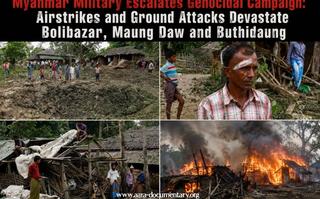
Myanmar Military Escalates Genocidal Campaign: Airstrikes and Ground Attacks Devastate Bolibazar and Buthidaung
On 1 July 2026, the Myanmar military launched coordinated airstrikes and ground attacks targeting Rohingya civilian areas in Maungdaw and Buthidaung townships, Rakhine State. The attacks struck Bolibazar village and several locations in Buthidaung, injuring civilians, including a child who lost a leg. **Action Against Rohingya Atrocities (AARA)** condemns these attacks as serious violations of international humanitarian law and calls for an immediate end to military operations against civilians, stronger international action, and unrestricted humanitarian access to affected communities.
