Weekly Special Report: Escalating Atrocities and Systematic Persecution of Rohingya in Arakan (Rakhine) State
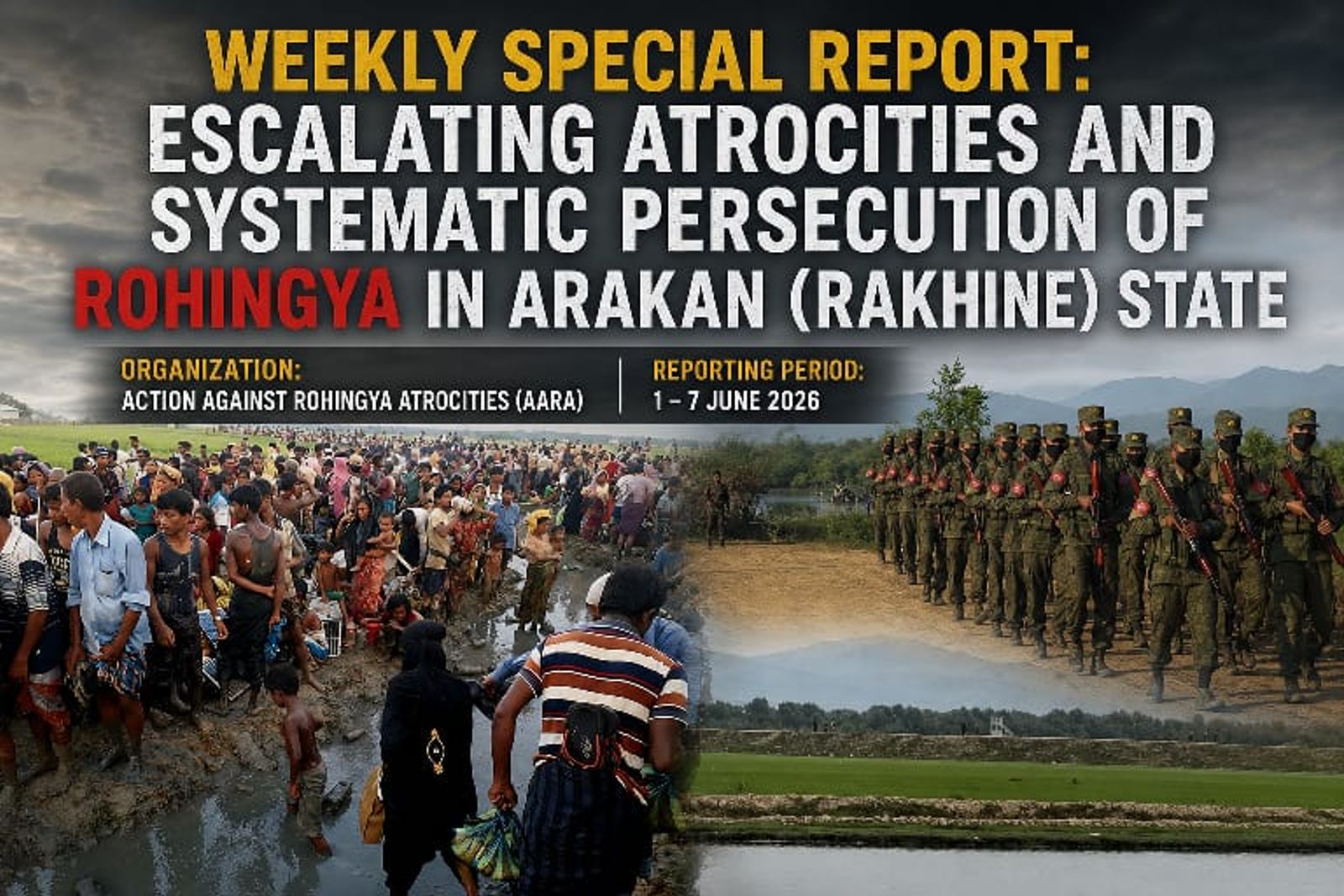
Reporting Period: 1 – 7 June 2026
Executive Summary
This special report by Action Against Rohingya Atrocities (AARA) documents a concerning escalation in human rights violations against the Rohingya population in Rakhine State, Myanmar, during the first ten days of June 2026. The Arakan Army (AA), having consolidated significant administrative control in various townships, is increasingly implicated in systematic abuses that mirror patterns of persecution previously attributed to the Myanmar military.
Key findings reveal widespread forced displacement and property seizures, arbitrary detentions and forced conscription, institutionalized extortion and harassment, and severe risks to life and dignity at the Bangladesh–Myanmar border. These actions collectively contribute to a deepening humanitarian crisis and underscore the urgent need for international intervention and accountability.
The report highlights incidents such as the eviction of Rohingya families, the construction of markets on seized land, forced military recruitment, and the arbitrary detention of returnees, all of which contravene international human rights and humanitarian law. AARA calls upon relevant authorities and the international community to address these grave violations and ensure the protection and rights of the Rohingya people.
I. Forced Displacement and Property Rights Violations
The Arakan Army's expanding territorial control in Rakhine State has been accompanied by a disturbing trend of forced displacement and the systematic appropriation of Rohingya-owned land and property. These actions not only dispossess vulnerable communities but also undermine any prospect of their safe and dignified return.
In Kyar Khaung Taung village tract, northern Maungdaw Township, the AA issued an eviction order on May 29, 2026, mandating 10 Rohingya households, comprising 54 individuals, to vacate their homes by June 8. This directive, delivered through local administrators, provided no clear explanation for the relocation nor any assistance for alternative accommodation, leaving families in a state of profound uncertainty and anxiety about their future.
Concurrently, in Nan Rakhone village, Buthidaung Township, the AA is reportedly constructing a new market on farmland previously owned by Rohingya families. Local sources indicate that this land was seized without compensation, and Rohingya residents seeking shop spaces in the new market are being compelled to pay substantial advance fees, ranging from 500,000 to 5,000,000 Myanmar Kyats. This practice represents a clear violation of property rights and an exploitative commercialization of confiscated assets.
Further exacerbating the crisis, AA forces have been observed demolishing Rohingya homes in Maung Ni Ward, Maungdaw Township. In early June, two-story houses belonging to internally displaced Rohingya were dismantled, with the timber reportedly being transported and exported to Bangladesh via the Kanyengchaung Economic Zone. This destruction of abandoned homes, including that of U Ismail, not only erases the physical presence of Rohingya communities but also diminishes any hope of return for those displaced by conflict.
II. Arbitrary Detention and Forced Conscription
The AA's assertion of administrative authority has led to a concerning pattern of arbitrary detentions and forced military conscription, affecting both Rohingya and other ethnic minorities.
As of June 6, 2026, the AA has resumed military registration and conscription efforts targeting Rohingya men and women aged 18 to 30 in villages such as Paung Zar, Hlabaw Zar, Kyauk Saat, and Mingalar Gyi in Maungdaw Township. Village administrators are reportedly collecting household lists, leading to widespread fear among families who worry about the safety and future of their children. This forced recruitment echoes past abuses and raises serious concerns about the involuntary participation of civilians in armed conflict.
The Dainat community has also faced similar pressures. A confrontation on May 23, 2026, in Thinbaw Hla village, Taung Pyo Letwe Sub-township, during an AA recruitment drive, escalated into violence, resulting in injuries and the detention of over 100 Dainat residents. While 92 individuals were subsequently released on June 1–2, concerns persist regarding those who remain in custody and the broader implications for ethnic minority communities.
In a particularly distressing incident on June 7, 2026, 16 Rohingya individuals, including infants, elderly persons, and women, were detained by the AA at the Pyin Phyu Chaung Wa camp. These individuals had initially fled Buthidaung Township and attempted to cross the Naf River into Bangladesh but were subsequently pushed back by the Bangladesh Border Guard (BGB). Stranded and vulnerable, they were then apprehended by AA border guards, highlighting the perilous situation faced by those caught between borders.
III. Extortion, Corruption, and Institutionalized Harassment
The consolidation of AA control has unfortunately paved the way for localized abuses of power, including extortion, bribery, and harassment, which disproportionately affect the Rohingya population.
In Area 3 of northern Maungdaw Township, Deputy Commander Mamat Ayas of the ULA/AA is accused of engaging in systemic extortion, bribery, and corruption against local Rohingya residents. Eyewitnesses report that Ayas, who reportedly has a criminal record, leverages false accusations of links to Rohingya armed groups to demand money, threatening and abusing innocent civilians who are unable to refuse his demands.
Furthermore, Rohingya civilians traveling through the Shwe Zar bridge checkpoint in Maungdaw town are subjected to discriminatory treatment and humiliating punishments. AA troops stationed at the checkpoint reportedly harass and abuse Rohingya, forcing them to perform physical exercises, such as 30 to 50 squats, for minor infractions like betel nut stains on their travel permits. This institutionalized harassment creates an environment of fear and indignity for Rohingya attempting to access essential services or travel within their own region.
IV. Border Violence and Humanitarian Crisis
The Bangladesh–Myanmar border, particularly along the Naf River, continues to be a zone of extreme danger for Rohingya attempting to flee persecution, with tragic consequences.
On June 6, 2026, a shooting incident on the Naf River near the Whykong area resulted in serious injury to a Rohingya fisherman named Anu from Ukhia Refugee Camp (13), with three other fishermen reported missing. Local sources attribute the shelling to AA forces, underscoring the ongoing threat of violence in border waters.
In a dire humanitarian situation, approximately 46 Rohingya individuals, including infants, the elderly, and those with chronic illnesses, were left stranded on the banks of the Naf River between June 5 and 6, 2026. These individuals, having fled hardships in Buthidaung, were pushed back by the BGB after attempting to enter Bangladesh and subsequently denied entry back into Maungdaw by the AA. Without food, water, or shelter, their plight highlights the critical need for safe passage and humanitarian assistance.
A tragic reminder of the lingering dangers of conflict, an 11-year-old Bangladeshi child, Suminai Tanchanja, was killed on June 2, 2026, by an unexploded mortar shell on the Bangladesh–Myanmar border. The shell, reportedly fired by the AA during clashes with the ARA, detonated while the child was playing, illustrating the indiscriminate and long-lasting impact of armed conflict on civilian lives.
V. Legal Analysis & Standards
The documented actions of the Arakan Army and other actors against the Rohingya population raise serious concerns under international human rights law (IHRL) and international humanitarian law (IHL). The forced displacement, arbitrary detention, forced conscription, and systematic harassment could constitute crimes against humanity and war crimes.
Specifically, the eviction orders and land seizures may violate the right to adequate housing and property, while forced recruitment of civilians, particularly children, is a grave breach of IHL. The denial of humanitarian access and the perilous conditions at the border further exacerbate the vulnerability of the Rohingya, potentially violating the principle of non-refoulement.
VI. Recommendations
To the Arakan Army (AA) / United League of Arakan (ULA):
• Immediately cease all forced recruitment, arbitrary detentions, and illegal land seizures.
• Investigate and hold accountable all personnel involved in extortion, bribery, and harassment of civilians.
• Ensure safe and unimpeded humanitarian access to all affected areas.
• Respect the rights and dignity of all ethnic communities in Rakhine State, including the Rohingya.
To the Government of Bangladesh:
• Uphold the principle of non-refoulement and refrain from pushing back Rohingya refugees to unsafe areas.
• Provide humanitarian assistance and protection to all individuals seeking refuge on its borders.
To the International Community (United Nations, Independent Investigative Mechanism for Myanmar (IIMM), ASEAN, Human Rights Watch, Amnesty International, Fortify Rights):
• Increase monitoring and documentation of human rights violations in Rakhine State.
• Establish robust accountability mechanisms for perpetrators of international crimes.
• Provide urgent humanitarian aid and support to displaced and vulnerable Rohingya populations.
• Exert diplomatic pressure on all parties to the conflict to adhere to international law and protect civilian lives.
VII. Methodology & About AARA
This report is compiled based on information gathered from local witnesses and AARA active members in the fields.
AARA is an independent organization dedicated to documenting, advocating against, and raising awareness about atrocities committed against the Rohingya people, striving for justice and accountability.
Latest news
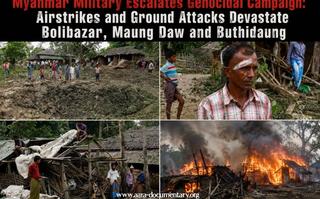
Myanmar Military Escalates Genocidal Campaign: Airstrikes and Ground Attacks Devastate Bolibazar and Buthidaung
On 1 July 2026, the Myanmar military launched coordinated airstrikes and ground attacks targeting Rohingya civilian areas in Maungdaw and Buthidaung townships, Rakhine State. The attacks struck Bolibazar village and several locations in Buthidaung, injuring civilians, including a child who lost a leg. **Action Against Rohingya Atrocities (AARA)** condemns these attacks as serious violations of international humanitarian law and calls for an immediate end to military operations against civilians, stronger international action, and unrestricted humanitarian access to affected communities.

Junta Air Force Bombs Maungdaw Town with Two Aerial Bombs
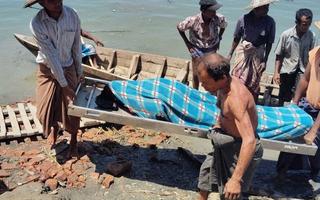
Report for Action Against Rohingya Atrocities (AARA): Minbya Boat Capsizing Incident
On 12 May 2026, an overcrowded boat carrying Rohingya villagers returning from a football match capsized in the Lay Myo River in Minbya Township, Rakhine State, killing 10 people, including an 8-year-old child. The tragedy underscores the dangerous conditions Rohingya communities face due to severe restrictions on freedom of movement, reliance on unsafe transportation, and heightened risks during the monsoon season. This incident reflects the broader humanitarian crisis confronting Rohingya in Rakhine State and the urgent need for unrestricted movement, safer transport, and increased humanitarian access.

CONDEMNING THE BRUTAL EXTRAJUDICIAL KILLING OF ROHINGYA YOUTHS BY THE ARAKAN ARMY (AA) IN NORTH MAUNGDAW
AARA strongly condemns the brutal extrajudicial killing of two Rohingya youths by the Arakan Army in Maungdaw. Arbitrarily detained while fishing, the victims were later found dead, showing clear signs of severe abuse. This atrocity reflects an escalating pattern of violence against Rohingya civilians. AARA urgently calls for an independent international investigation, accountability for perpetrators, and immediate protection for the Rohingya population.