AARA Monthly Report: Escalating Human Rights Violations Against Rohingya in Rakhine State | June 2026
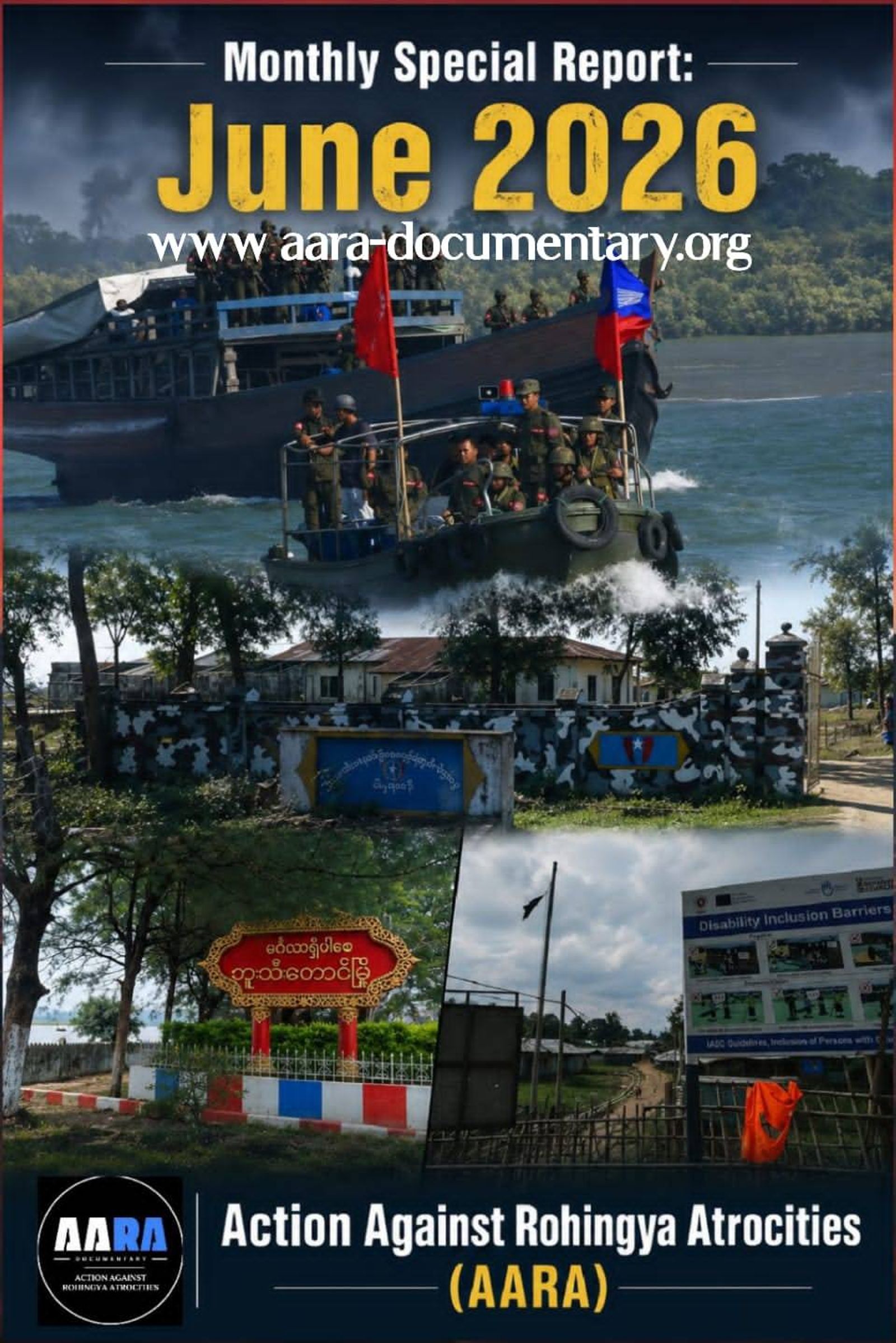
Action Against Rohingya Atrocities (AARA)'s Monthly Special Report | June 2026 documents escalating human rights violations against Rohingya communities across Rakhine State, Myanmar, and along the Bangladesh–Myanmar border. The report details patterns of extortion, forced displacement, land confiscation, arbitrary detention, forced conscription, restrictions on freedom of movement, and attacks on civilians, including shelling and airstrikes. It also highlights continued cross-border displacement into Bangladesh and the worsening humanitarian situation. AARA calls on the international community to ensure accountability, strengthen civilian protection, expand humanitarian assistance, and support the safe, voluntary, and dignified return of Rohingya refugees in accordance with international law.
Executive Summary
This report documents serious human rights violations and humanitarian concerns affecting Rohingya communities across Rakhine State, Myanmar, and along the Bangladesh–Myanmar border during June 2026. The reporting period was marked by persistent patterns of extortion and corruption, forced displacement, unlawful land confiscation, arbitrary detention, forced conscription, restrictions on freedom of movement, and attacks against civilians. Shelling and aerial bombardments continued to place civilian populations at grave risk, while ongoing armed conflict contributed to further displacement and cross-border refugee movements into Bangladesh.
The incidents documented during June indicate an environment in which Rohingya civilians remain exposed to widespread insecurity, discrimination, and deprivation of fundamental rights. Continued restrictions, abuses by local authorities and armed actors, and the absence of effective accountability mechanisms have compounded an already severe humanitarian situation.
Action Against Rohingya Atrocities (AARA) calls upon the international community to take immediate and coordinated measures to strengthen civilian protection, ensure accountability for perpetrators of violations, expand humanitarian assistance, and support durable solutions that uphold the rights, dignity, and security of the Rohingya people.
Introduction
Throughout June 2026, Rohingya communities in Rakhine State continued to experience widespread human rights violations amid escalating armed conflict and deteriorating humanitarian conditions. Information collected and verified from multiple sources indicates recurring patterns of abuse affecting civilians across northern Rakhine, including extortion, forced displacement, arbitrary detention, forced recruitment, restrictions on movement, and attacks causing civilian casualties.
The documented incidents demonstrate the continued vulnerability of Rohingya civilians and reflect an environment characterized by insecurity, discrimination, and limited access to protection. Many affected families remain displaced or unable to safely return to their homes, while ongoing conflict continues to disrupt livelihoods, education, healthcare, and humanitarian access.
This report presents verified incidents documented during June 2026 and seeks to contribute to ongoing monitoring, accountability efforts, and international advocacy concerning the human rights situation affecting the Rohingya population.
Incidents of Concern: June 2026
Extortion, Bribery, and Corruption
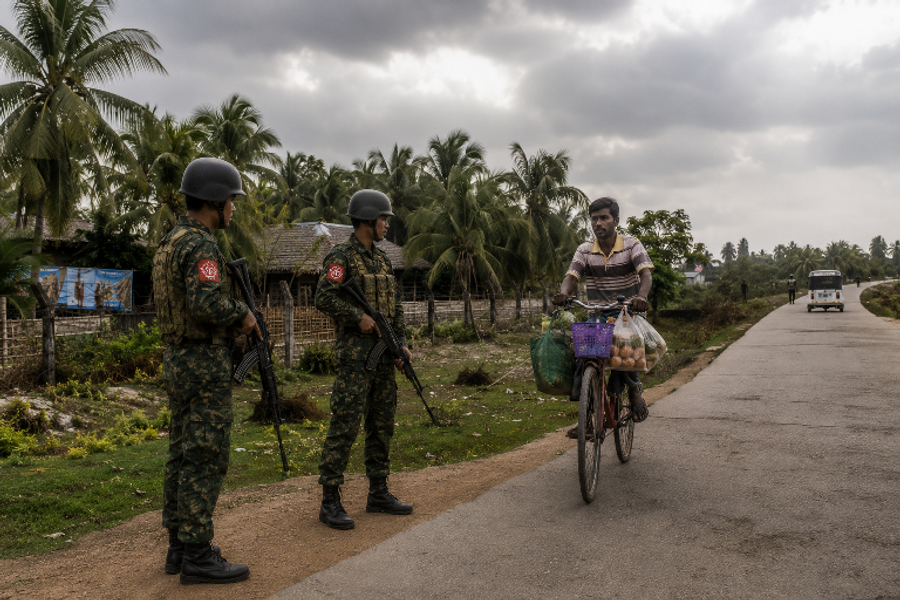
Residents of northern Maungdaw Township reported persistent incidents of extortion, bribery, and corruption by local authorities. According to documented accounts, Rohingya civilians were subjected to financial demands, intimidation, harassment, and abuse, frequently based on unfounded allegations of association with armed groups. Given their vulnerable status and limited access to legal protection, many victims reported having little or no ability to refuse such demands.
One documented case involved a deputy commander in Area 3 of northern Maungdaw Township who was reportedly responsible for multiple acts of financial exploitation targeting Rohingya residents. Community members also expressed serious concerns regarding the absence of impartiality and accountability within local administrative and judicial structures, calling for prompt investigation and action against officials implicated in corrupt practices.
Forced Displacement and Land Confiscation
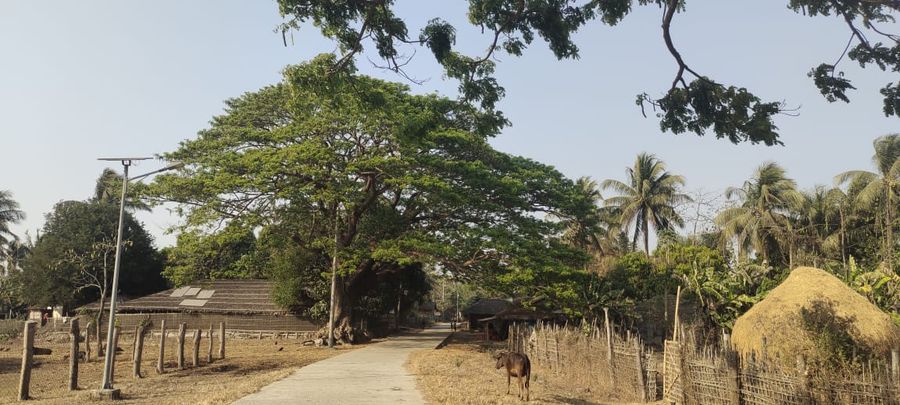
Forced displacement and unlawful land confiscation remained significant concerns throughout June 2026.
In Kyar Khaung Taung village tract, northern Maungdaw Township, approximately 10 Rohingya households comprising 54 individuals were reportedly ordered by local armed groups to vacate their homes by 8 June. The directive left affected families facing uncertainty regarding relocation and future access to shelter and livelihoods.
Additional reports indicated that farmland previously owned by Rohingya residents in Nan Rakhone village, Buthidaung Township, was used for the construction of a local market without compensation to the original landowners. Local armed groups reportedly collected advance payments from Rohingya individuals seeking market stalls, despite unresolved ownership claims. Many displaced families remain unable to return to their homes or agricultural land because of continuing insecurity, increasing their vulnerability to homelessness, particularly during the monsoon season.
Forced Conscription and Arbitrary Detention
Reports received during June indicated the resumption of forced conscription targeting Rohingya men and women between the ages of 18 and 30 in villages across Maungdaw Township. Village administrators were reportedly instructed to compile names using household registration records, creating widespread fear among families that listed individuals would be compelled to perform military service. Parents expressed deep concern for the safety of their children, citing previous cases in which individuals recruited by armed groups failed to return or communicate with their families.
Arbitrary detention also continued.
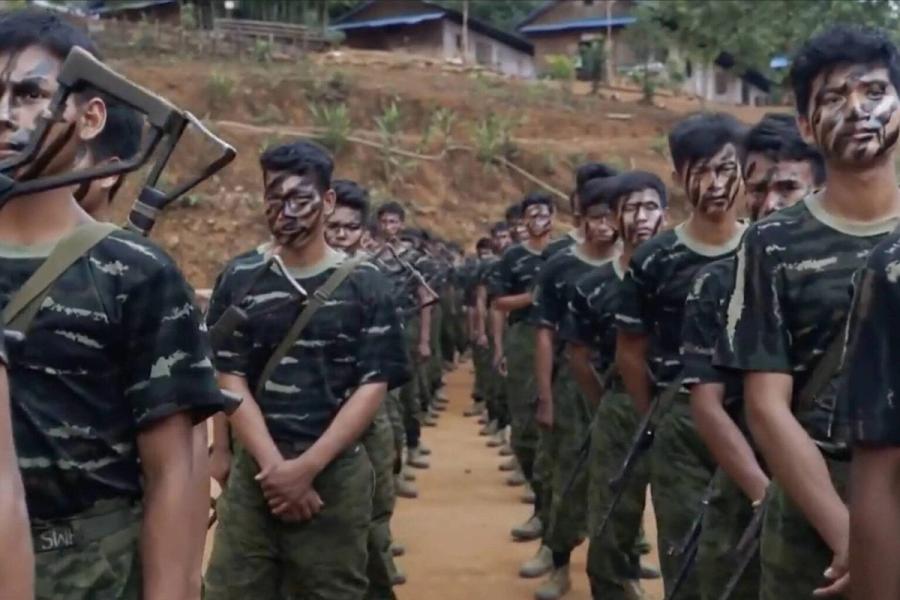
In one documented incident, 16 Rohingya individuals including women, elderly persons, and infants were detained by local armed groups after being returned from Bangladesh. The group had reportedly attempted to cross the Naf River to escape deteriorating conditions but was intercepted by border authorities before being handed over. Concerns were raised regarding their welfare after prolonged exposure to heavy rainfall without adequate food, shelter, or medical assistance.
In a separate case, Rohingya refugee U Swe Lu, who had returned to Latha Ook village in Maungdaw Township after fleeing to Bangladesh in 2024, was arrested by local armed groups and sentenced to three years' imprisonment for illegal border crossing. Local sources noted that similar offences ordinarily carry significantly shorter sentences, raising concerns regarding discriminatory and disproportionate punishment imposed on returning Rohingya.
Violence and Attacks on Civilians
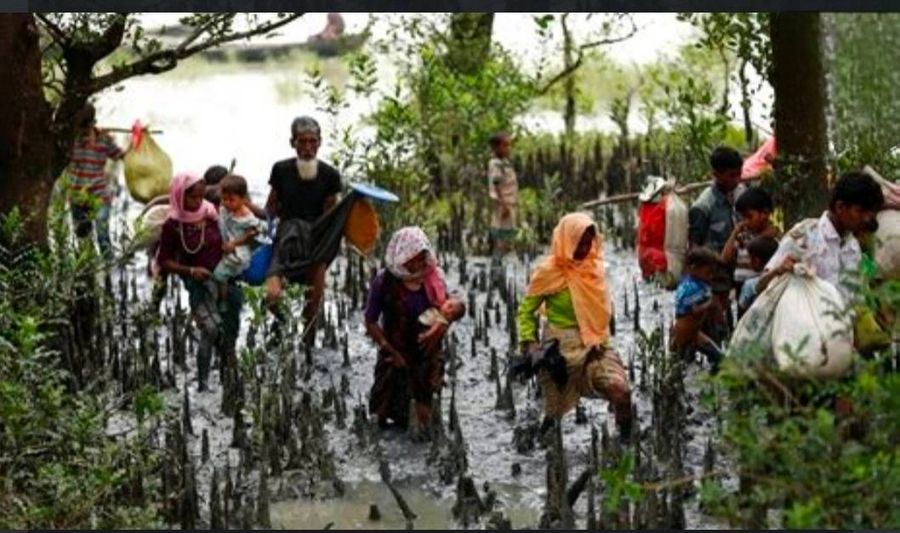
Civilians continued to experience the direct consequences of ongoing hostilities throughout the reporting period.
On 3 June, an 11-year-old Bangladeshi child, Suminai Tanchanja, was killed near the Bangladesh–Myanmar border after an unexploded mortar shell detonated while the child was reportedly playing nearby. The munition was believed to have originated from earlier clashes involving local armed groups.
On 6 June, shelling reportedly carried out by local armed groups struck a fishing boat on the Naf River near the Bangladesh–Myanmar border. One Rohingya refugee sustained serious injuries while three others were reported missing.
During mid-June, military junta airstrikes targeted at least six locations in and around Kyauktaw Township. Reports indicated that at least 12 civilians, including children, were killed and numerous others injured. Residential neighbourhoods, including a public market, were reportedly affected, causing extensive destruction and further displacement of civilians.
On 24 June, military aircraft reportedly dropped two 500-pound bombs on Maungdaw town during heavy rainfall. Two students sustained injuries, while approximately twelve homes predominantly belonging to Hindu families were damaged. The reported impact on civilian residential areas further illustrates the continuing risks posed to non-combatants during military operations.
Restrictions on Movement and Harassment
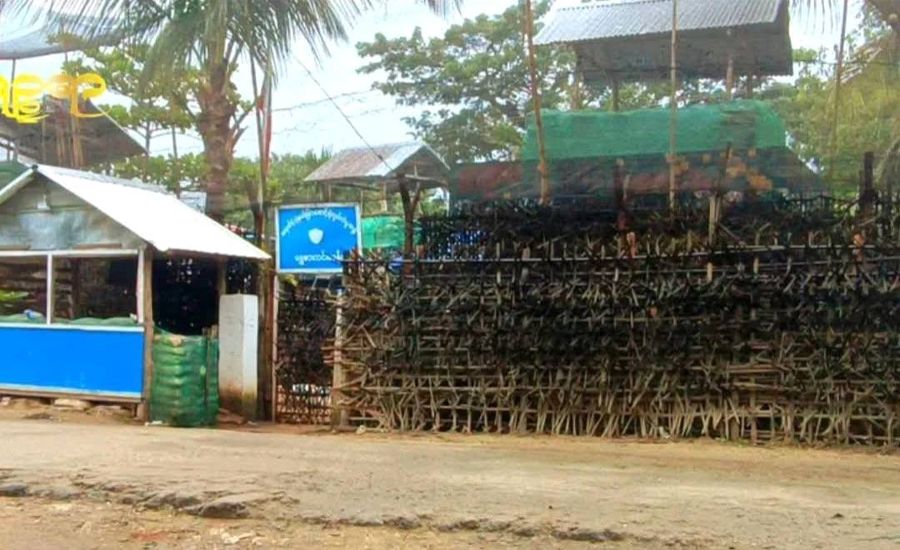
Restrictions on freedom of movement remained a defining feature of daily life for Rohingya communities.
At the Shwe Zar checkpoint in Maungdaw Township, local armed groups reportedly subjected Rohingya civilians to degrading treatment and harassment. Individuals whose mandatory recommendation letters contained minor stains or imperfections were allegedly forced to perform punitive physical exercises, including repeated sit-ups. Community members reported that elderly persons and religious leaders were not exempt from such treatment, reinforcing an atmosphere of intimidation, humiliation, and fear.
Cross-border Incidents and Refugee Movements
Cross-border developments during June reflected both continuing insecurity in Rakhine State and broader humanitarian challenges.
Bangladesh Navy personnel intercepted multiple attempts to transport cement illegally from Bangladesh into Rakhine State. On 2 June, authorities arrested 20 individuals and seized approximately 1,700 bags of cement. A further operation on 27 June resulted in the seizure of 1,450 bags and the arrest of 21 additional individuals, highlighting ongoing illicit cross-border trade linked to the conflict.
The humanitarian situation also continued to drive displacement into Bangladesh. Between December 2024 and 31 May 2026, more than 152,000 newly arrived Rohingya were registered in Bangladesh, including 2,260 individuals registered during May 2026. The total Rohingya refugee population in Bangladesh has consequently approached 1.2 million people. Women and children account for approximately 78 percent of the registered population, while around 12 percent are identified as particularly vulnerable. These figures illustrate the continuing scale of displacement generated by insecurity, persecution, and conflict in Rakhine State.
Conclusion
The human rights situation affecting Rohingya communities in Rakhine State and along the Bangladesh–Myanmar border remained deeply concerning throughout June 2026. The incidents documented in this report reveal continuing patterns of extortion, forced displacement, land confiscation, arbitrary detention, forced conscription, restrictions on movement, and attacks affecting civilian populations.
The cumulative impact of these violations has further undermined the safety, dignity, and fundamental rights of Rohingya civilians while contributing to continued displacement and worsening humanitarian conditions. Without meaningful protection, accountability, and sustained international engagement, the risks facing affected communities are likely to persist.
Action Against Rohingya Atrocities (AARA) calls upon the international community to:
- Demand the immediate cessation of all hostilities that endanger civilian lives, civilian infrastructure, and property.
- Ensure independent, impartial, and effective accountability for all perpetrators responsible for violations of international human rights law and international humanitarian law, regardless of affiliation.
- Expand timely humanitarian assistance and protection for displaced populations and conflict-affected communities.
- Strengthen independent monitoring, documentation, and reporting mechanisms to support accountability and compliance with international legal obligations.
- Support conditions conducive to the safe, voluntary, dignified, and sustainable return of Rohingya refugees to their places of origin, with full respect for their rights, security, and equal access to justice.
Related articles
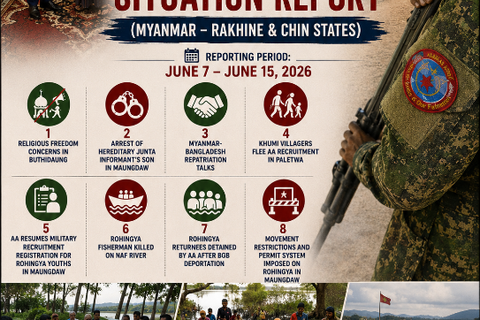
AARA Weekly Analysis Human Rights Violations in AA Control in Rakhine and Chin States Reporting Period | 8–14 Jun 2026
During 8–14 June 2026, AARA documented growing restrictions on religious freedom, renewed military recruitment of Rohingya youth, arbitrary detention, movement restrictions, and deadly violence affecting Rohingya civilians in Rakhine State, alongside the displacement of Khumi communities in Chin State due to forced conscription practices. The findings reveal a worsening human rights situation under Arakan Army control.
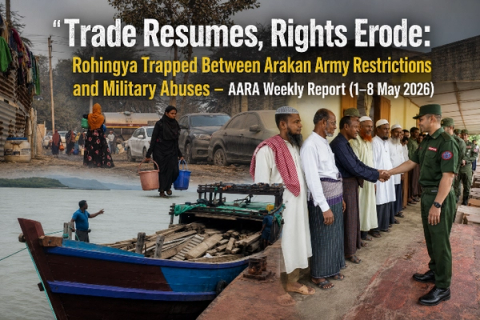
Rohingya Under Siege: Weekly Report on Repression and Human Rights Violations in Rakhine State
This weekly report by Action Against Rohingya Atrocities (AARA) documents major developments affecting Rohingya communities in Rakhine State and across Myanmar from 1 to 8 May 2026. The report highlights arbitrary arrests, religious restrictions, extortion, aerial bombardments, landmine casualties, and targeted arrests of Rohingya refugees in Yangon. It also examines the resumption of Maungdaw–Teknaf border trade and growing administrative controls imposed by the Arakan Army. The findings underscore the continued vulnerability of the Rohingya people and the urgent need for international protection, accountability, and justice.
Latest news
1,500 Myanmar Nationals Deported from Malaysia Aboard Junta Warships Amid Airstrike Horror
Malaysia has begun deporting around 1,500 Myanmar nationals despite ongoing conflict, forced conscription risks, and warnings that safe and dignified return remains impossible.
August 25 and the Hindu Massacre Narrative: How the Arakan Army Is Shifting Blame Toward Rohingya and ARSA
The article examines how the Arakan Army's August 25, 2026 Hindu commemoration presents the 2017 Hindu massacre as an ARSA crime, raising questions over efforts to shift blame onto Rohingya and reshape the history of the Rohingya genocide.
Arakan Army’s Digital Propaganda Campaign Targets Rohingya Identity and Abuses, Analysis Finds
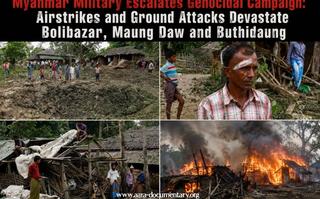
Myanmar Military Escalates Genocidal Campaign: Airstrikes and Ground Attacks Devastate Bolibazar and Buthidaung
On 1 July 2026, the Myanmar military launched coordinated airstrikes and ground attacks targeting Rohingya civilian areas in Maungdaw and Buthidaung townships, Rakhine State. The attacks struck Bolibazar village and several locations in Buthidaung, injuring civilians, including a child who lost a leg. **Action Against Rohingya Atrocities (AARA)** condemns these attacks as serious violations of international humanitarian law and calls for an immediate end to military operations against civilians, stronger international action, and unrestricted humanitarian access to affected communities.