AARA Monthly Situation Report - March 2026: Militarization, Civilian Abuse and Expanding Control in Rakhine State
March 2026 marked a severe escalation of violence and repression in Rakhine State. This report documents widespread airstrikes, village destruction, forced recruitment, arbitrary detention, and increasing restrictions on religious and civilian life, leaving Rohingya communities trapped in deepening insecurity.
EXECUTIVE SUMMARY
March 2026 witnessed a significant and alarming deterioration in the security and human rights situation across Rakhine State. The Myanmar military intensified its campaign of airstrikes, systematic village destruction, and strategic fortification, particularly around key urban centers including Sittwe, Pauktaw, and Kyauktaw.
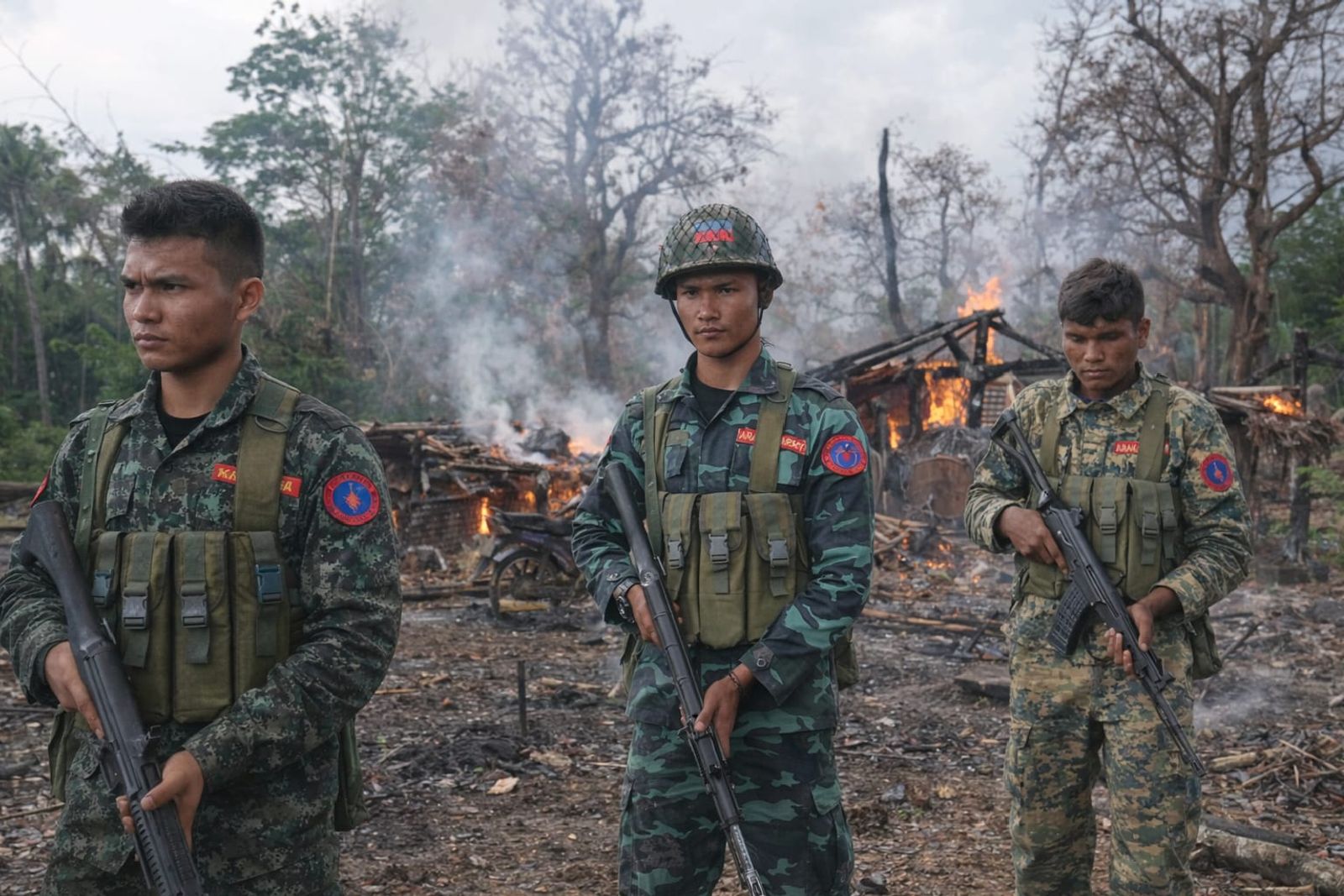
Simultaneously, the Arakan Army/United League of Arakan (AA/ULA) expanded its territorial and administrative control through coercive governance mechanisms. These included forced recruitment, arbitrary detention, extortion, intrusive surveillance, and restrictions on religious and community life.
Across Maungdaw, Buthidaung, Pauktaw, Kyauktaw, Minbya, and Sittwe, civilians, particularly Rohingya communities remain trapped between competing armed actors, facing escalating fear, insecurity, and systemic abuse.
SNAPSHOT: MARCH 2026
- Villages destroyed around Sittwe: Approximately 100
- Major affected townships: Sittwe, Pauktaw, Buthidaung, Maungdaw, Kyauktaw, Minbya
- Primary violations reported: Forced recruitment, extortion, arbitrary detention, airstrikes, property seizure
- Religious restrictions: Increased interference with mosques and religious leadership
- Civilian concerns: Arrests, surveillance, land confiscation, and risk of military retaliation
01. MILITARIZATION AROUND SITTWE
Strategic Destruction and Defensive Expansion
In early March, credible reports indicated that the Myanmar military cleared or destroyed approximately 100 villages surrounding Sittwe, establishing a defensive buffer zone in anticipation of confrontation with the Arakan Army.
Affected Areas Include:
Phon Thar, Kwan Taung, Nyo Rang Chaung, Aidin, Ye Chan Pyin, Aung Daing, Khak Taw Pyin, Pallin Pyin, Ohn Ye Fo, Byay Phyu, and Mingin Taw.
Military Measures Observed:
- Construction of outer defensive barriers
- Reinforcement of internal city defenses
- Expansion of central military installations
- Forced removal of civilians suspected of AA affiliation
These actions reflect a deliberate militarization strategy with severe consequences for civilian populations.
02. EXPANSION OF AA/ULA CONTROL
Governance Through Coercion and Surveillance
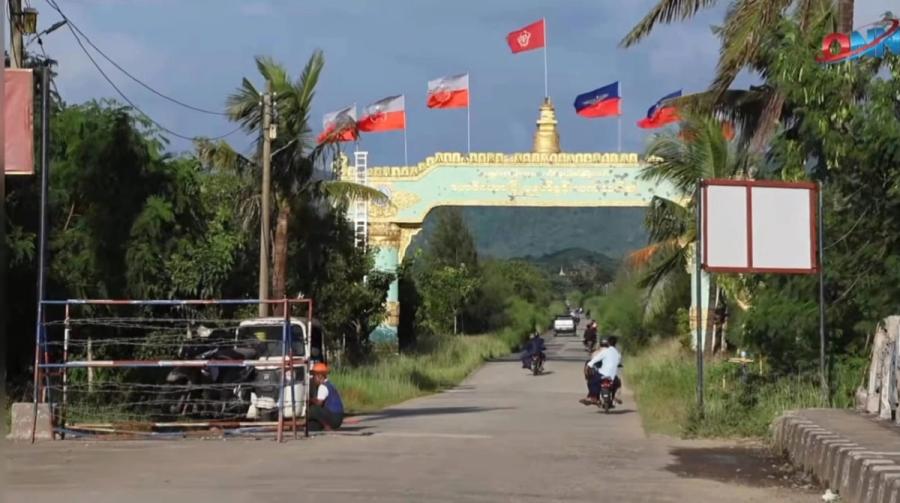
Throughout March, AA/ULA authorities expanded their control across northern Rakhine through highly coercive administrative systems.
Reported Measures:
- Forced military training for village leaders
- Comprehensive household registration campaigns
- Land and property mapping
- Strict travel restrictions
- Imposition of taxes and checkpoint fees
- Confiscation of homes and civilian assets
- Intensified monitoring of religious institutions
Although Rohingya administrators were formally appointed in some areas, residents consistently reported that these figures held little real authority, functioning under strict control.
03. FORCED RECRUITMENT AND ARBITRARY DETENTION
Escalating Pressure on Civilian Populations
Forced recruitment increased sharply during March, placing systematic pressure on communities.
Recruitment Practices Included:
- Mandatory selection of one individual per village
- Compulsory military training for local administrators
- Family-level pressure to provide recruits
- Financial demands to avoid recruitment
Targeting of Women and Girls
Multiple alarming cases were documented:
- Three girls abducted from Wara Kyun
- Two detained near Phon Nyo Laek Bridge
- Ten taken from Kintaung village
- Two arrested in Say Oo Kya village
Families expressed grave concern over the risk of abuse and sexual violence.
Arbitrary Arrests Reported:
- Ali Baut Htoo abducted from Naser village
- 17-year-old Mamat Ayas Salam detained
- Entire families arrested in Kyauk Hla Pyin
- Civilians held for ransom or extortion
04. EXTORTION, PROPERTY SEIZURE, AND ECONOMIC PRESSURE
Systematic Financial Exploitation
Economic coercion intensified significantly, further destabilizing already vulnerable communities.
Reported Practices:
- Travel fees reaching up to 800,000 kyat
- Monthly household taxation
- Payments demanded to avoid detention
- Extortion at checkpoints between Buthidaung and Maungdaw
- Financial pressure on mosque committees
Property Confiscation Included:
- Residential homes
- Agricultural land
- Motorcycles and transport assets
- Construction materials
One family in Kyauk Hla Pyin reportedly lost over 124 million kyat worth of property, illustrating the scale of economic harm.
05. RELIGIOUS RESTRICTIONS
Interference in Religious Freedom
Religious life faced increasing interference, particularly in Maungdaw.
Reported Restrictions:
- Mandatory submission of personal data by mosque committees
- Financial demands from trustees
- Loss of autonomy in appointing imams
- Requirement of approval from AA-linked authorities for religious decisions
- Restrictions on women wearing hijabs or burqas during official processes
These measures were widely described by residents as humiliating, discriminatory, and deeply intrusive.
06. HOUSEHOLD INSPECTIONS AND SURVEILLANCE
Expansion of Monitoring Mechanisms
AA-linked authorities conducted extensive household inspections and registration campaigns in areas including Nga Khu Ya, Thein Taung, Mingalar Gyi, and U Hla.
Reported Practices:
- Room-by-room searches of homes
- Forced entry into locked spaces
- Photography and documentation of family members
- Mapping of land ownership
- Restrictions on religious attire during documentation
Residents fear this data will be used for future arrests, forced recruitment, land confiscation, and movement restrictions.
07. AIRSTRIKES AND MILITARY ESCALATION
Widespread Aerial Attacks
The Myanmar military significantly escalated its use of air power.
- March 6–7 (Pauktaw): Over 100 bombs reportedly dropped
- March 12 (Kyauktaw): 500-pound bombs damaged critical infrastructure
- March 8 (Darletchaung): Bombing of AA positions and a POW camp
According to AA statements, 116 prisoners of war were killed in the Darletchaung strike.
Increased Drone Surveillance
Residents in Maungdaw reported rising drone activity, heightening fears of imminent future airstrikes.
08. CROSS-BORDER TENSIONS, SMUGGLING, AND TRAFFICKING
Regional Instability Intensifies
Cross-border insecurity continued to expand, particularly along the Bangladesh-Rakhine corridor.
Reported Incidents:
- Seizure of 230,000 yaba pills near Teknaf
- Arrests linked to smuggling of construction materials
- High payments demanded for border crossings
- Interception of civilians seeking medical treatment
- Ongoing trafficking networks between Rakhine and Bangladesh
CONCLUSION
March 2026 was defined by intensifying conflict, deepening militarization, and widespread civilian suffering across Rakhine State.
The Myanmar military escalated airstrikes, village destruction, and defensive fortifications, while the AA/ULA expanded systems of control through recruitment, detention, extortion, and surveillance.
Civilians—particularly Rohingya communities—remain caught between multiple armed actors, facing escalating risks with little to no accountability or protection.
RECOMMENDATIONS
To the Myanmar Military:
- Immediately cease airstrikes on civilian areas
- End the destruction of villages
- Stop arbitrary arrests and retaliatory actions
To the Arakan Army / ULA:
- End forced recruitment and unlawful detention
- Release all civilians held without due process
- Cease interference in religious affairs
- Stop extortion and property confiscation
To the International Community:
- Strengthen monitoring of human rights violations in Rakhine State
- Support independent documentation and reporting efforts
- Apply coordinated pressure on all armed actors to protect civilians
- Reinforce accountability mechanisms for serious human rights abuses
Related articles
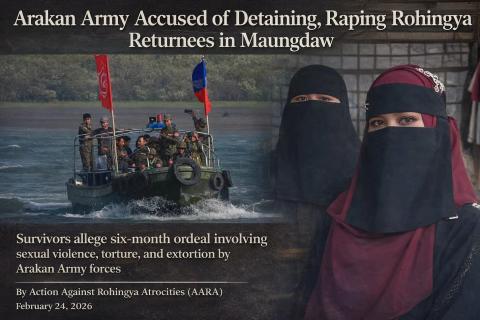
Latest news

AARA Alleges 51 Rohingya Civilians Detained, Elderly Man Killed in Rathedaung Township by Militant Arakan Army (AA)
Rohingya villagers face urgent concerns over a reported deadline imposed by the militant Arakan Army (AA) to leave their homes by October 17, 2026, raising fears of further displacement and loss of shelter.

1,500 Myanmar Nationals Deported from Malaysia Aboard Junta Warships Amid Airstrike Horror
Malaysia has begun deporting around 1,500 Myanmar nationals despite ongoing conflict, forced conscription risks, and warnings that safe and dignified return remains impossible.
August 25 and the Hindu Massacre Narrative: How the Arakan Army Is Shifting Blame Toward Rohingya and ARSA
The article examines how the Arakan Army's August 25, 2026 Hindu commemoration presents the 2017 Hindu massacre as an ARSA crime, raising questions over efforts to shift blame onto Rohingya and reshape the history of the Rohingya genocide.