AARA' weekly documents escalating atrocities against the Rohingya and growing international calls for accountability.
AARA’s weekly report documents escalating human rights violations against the Rohingya in Rakhine State, including airstrikes, forced conscription, sexual violence, and economic extortion, while international calls for accountability continue to grow.
Executive Summary
During the reporting period of 9–15 May 2026, the human rights situation in Rakhine State, Myanmar, has deteriorated sharply. The Rohingya population continues to endure systematic persecution amid escalating armed conflict between the Myanmar military junta and the Arakan Army.
Civilians remain trapped in an increasingly volatile environment characterized by indiscriminate airstrikes, forced conscription, sexual violence, and widespread economic extortion. Verified reports indicate that both state and non-state armed actors are contributing to grave violations of international humanitarian law.
The severity and scale of abuses signal a deepening protection crisis. International attention is growing, with emerging discussions on targeted sanctions and accountability measures against responsible actors.
1. Escalation of Military Violence and Airstrikes
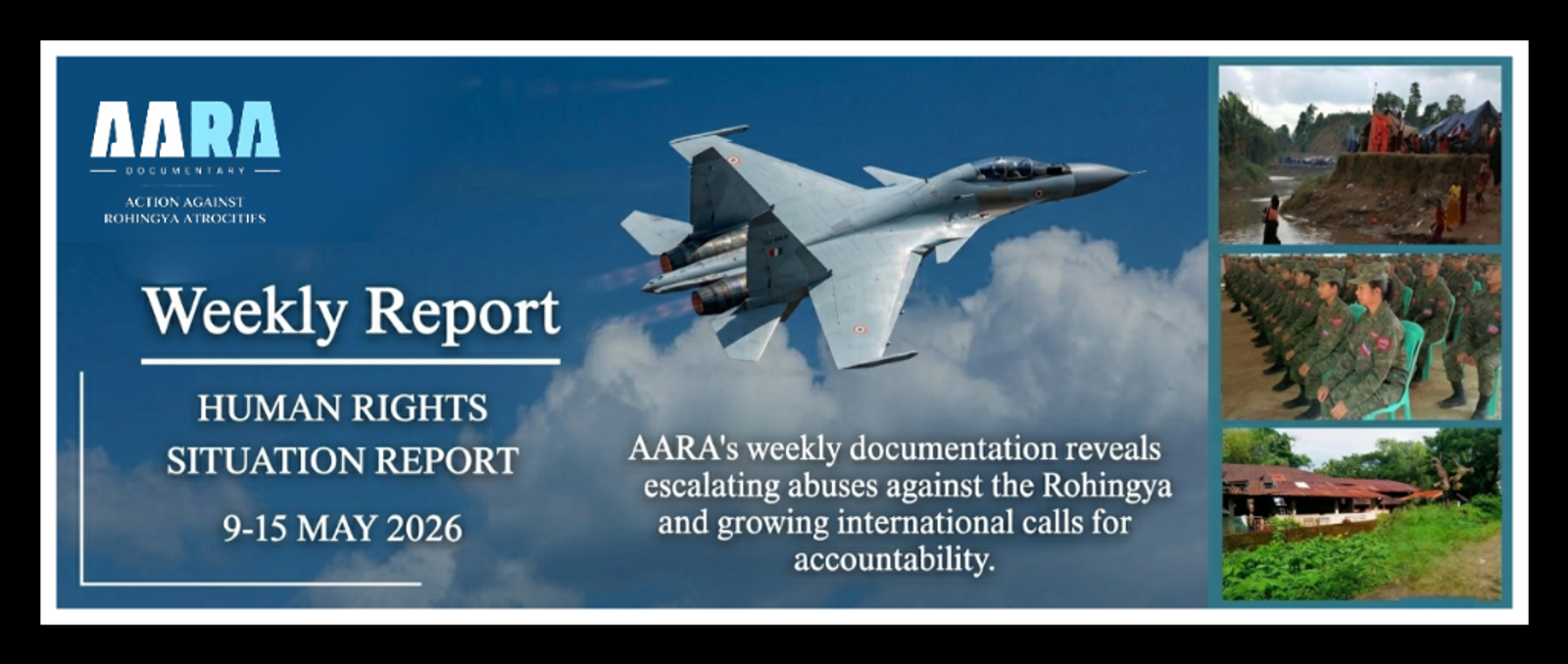
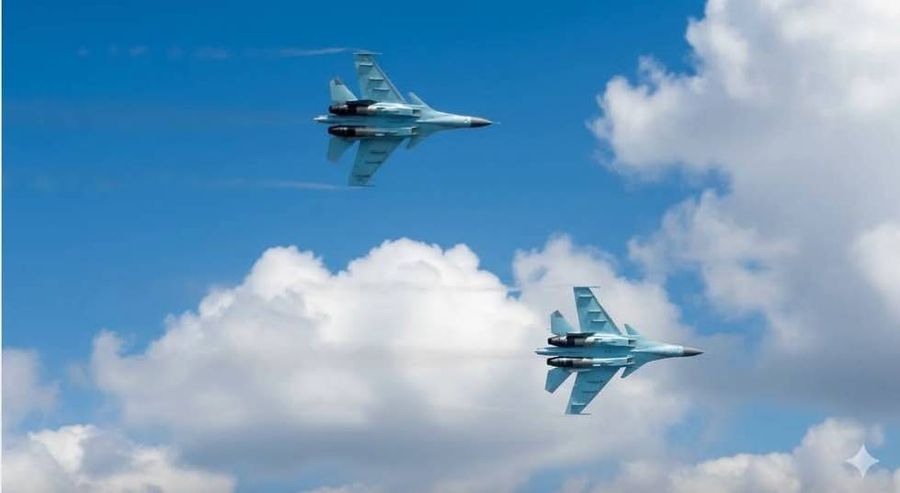
The Myanmar military junta has intensified aerial operations across Arakan Army–controlled territories, including Minbya and Kyauktaw Townships.
- Deployment of heavy aerial munitions, including 500-pound bombs and cluster-type explosives
- Direct strikes on residential zones, farmland, and civilian infrastructure
- Confirmed civilian casualties, including children and medical personnel
- Destruction of livestock and essential community assets
These indiscriminate attacks have resulted in large-scale displacement, forcing already vulnerable Rohingya families to flee repeatedly in search of safety. The humanitarian situation continues to deteriorate with limited access to medical care, shelter, and protection.
2. Forced Conscription and Exploitation by the Arakan Army
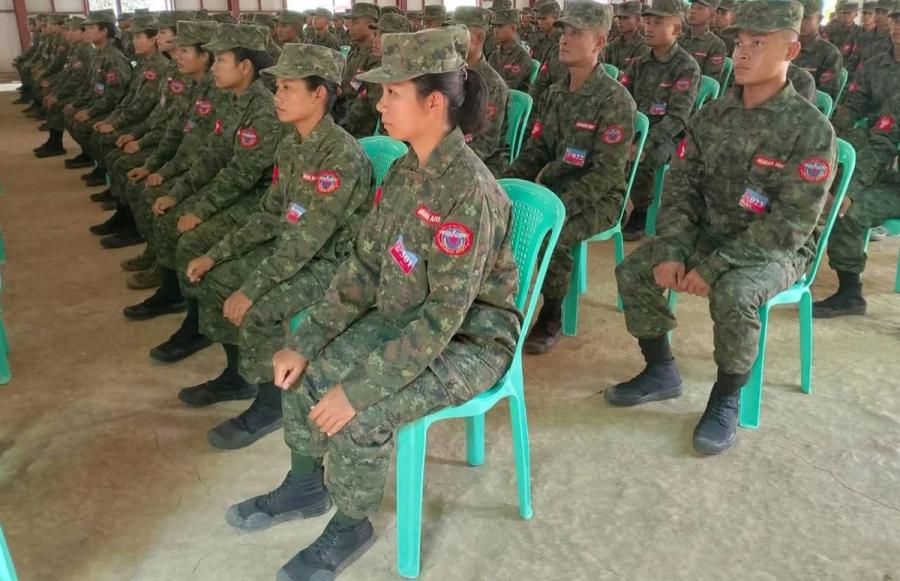
Under the newly declared “National Defense Emergency” framework, the Arakan Army has launched an aggressive and coercive recruitment campaign.
Key findings include:
- Forced recruitment targeting individuals aged 18–45
- Credible reports of child conscription, including children as young as 10 years old
- Systematic targeting of Rohingya communities for recruitment pressure
- Extortion practices demanding up to 100,000 kyats for exemption from service
These practices have created a climate of fear and coercion, severely undermining civilian protection and violating fundamental human rights norms.
3. Systemic Sexual Violence and Repression
A recent briefing by the Burmese Rohingya Organisation UK (BROUK) highlights alarming patterns of sexual violence in Arakan Army–controlled areas.
Documented violations include:
- Rape and gang rape during raids and detention operations
- Sexual violence threats used as a tool of intimidation
- Arbitrary and incommunicado detention of Rohingya women and girls
- Complete absence of accountability mechanisms
These abuses indicate the systematic use of sexual violence as a weapon of control and repression, contributing to long-term psychological and social harm within the community.
4. Economic Extortion and Discriminatory Practices
The Rohingya population continues to face widespread economic targeting and discriminatory restrictions affecting daily survival.
| Location | Reported Incident | Impact |
| Sittwe Airport | Bribes up to 100,000 kyats demanded alongside racist interrogations | Restricts mobility and imposes severe financial burden |
| Maungdaw Markets | Arbitrary taxation of 100,000–200,000 kyats imposed on shopkeepers | Collapse of local trade and livelihoods |
| Buthidaung | Homes of displaced Rohingya sealed and sold under alleged “collaboration” claims | Permanent displacement and property loss |
| Kyauk Hlay Kar Market | Confiscation of over 50 motorcycles with ransom demands | Loss of essential transportation and economic assets |
In addition, the continued use of the term “Rohingya Bengali” in official and public discourse reflects persistent denial of Rohingya identity, reinforcing systemic discrimination and exclusion.
5. International Response and Accountability Developments
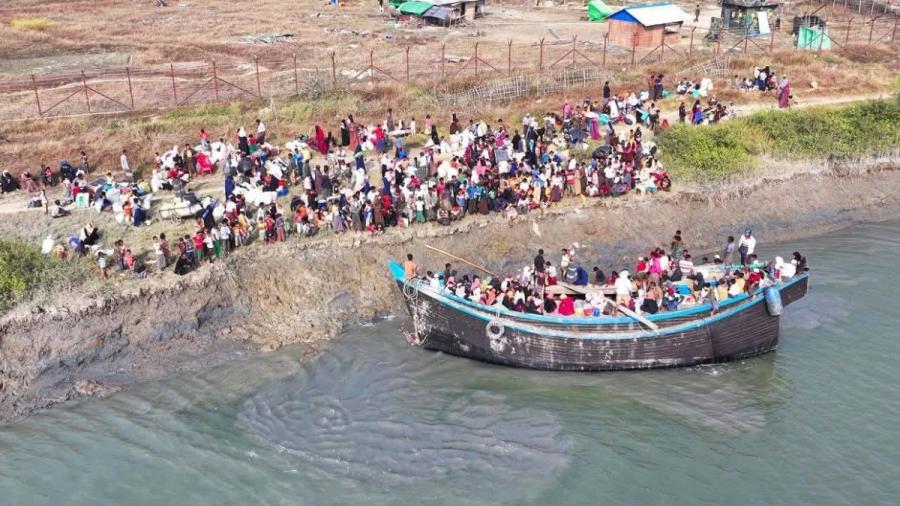
International concern regarding atrocities in Rakhine State is intensifying.
- The United Kingdom government is reportedly preparing targeted sanctions against the Arakan Army and its political wing, the United League of Arakan (ULA)
- Human rights organizations continue to document violations and advocate for international accountability mechanisms
- Calls are growing for urgent action by the United Nations Security Council to address escalating crimes against humanity
This marks a potential shift toward broader recognition that accountability must extend to both state and non-state armed actors responsible for abuses.
Conclusion
The reporting period demonstrates a clear escalation in organized violence, coercion, and systematic human rights violations against the Rohingya population. The convergence of aerial bombardment, forced recruitment, sexual violence, and economic persecution reflects a deeply entrenched protection crisis.
Urgent international intervention is required to prevent further deterioration and to ensure accountability for all perpetrators.
Action Against Rohingya Atrocities (AARA)
Weekly Human Rights Situation Report from 9 – 15 May 2026
Human Rights Documentation and Advocacy Unit
Related articles
Rohingya Under Siege: Weekly Report on Repression and Human Rights Violations in Rakhine State
This weekly report by Action Against Rohingya Atrocities (AARA) documents major developments affecting Rohingya communities in Rakhine State and across Myanmar from 1 to 8 May 2026. The report highlights arbitrary arrests, religious restrictions, extortion, aerial bombardments, landmine casualties, and targeted arrests of Rohingya refugees in Yangon. It also examines the resumption of Maungdaw–Teknaf border trade and growing administrative controls imposed by the Arakan Army. The findings underscore the continued vulnerability of the Rohingya people and the urgent need for international protection, accountability, and justice.
AARA Monthly Situation Report - March 2026: Militarization, Civilian Abuse and Expanding Control in Rakhine State
March 2026 marked a severe escalation of violence and repression in Rakhine State. This report documents widespread airstrikes, village destruction, forced recruitment, arbitrary detention, and increasing restrictions on religious and civilian life, leaving Rohingya communities trapped in deepening insecurity.
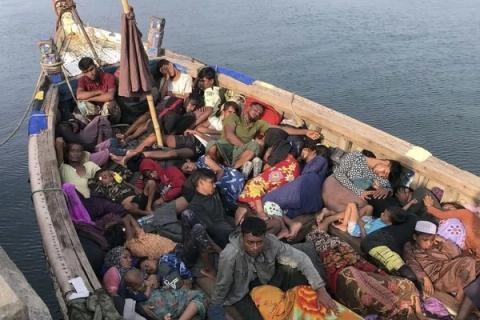
Special Investigative Report: The 2026 Andaman Sea Tragedy and the Deepening Global Maritime Crisis of the Rohingya
The Rohingya maritime crisis has escalated further with the tragic sinking of the Malaysia-bound vessel Tanjina Sultana near the Andaman Islands on 9 April 2026. The vessel carried an estimated 250–280 passengers, predominantly Rohingya refugees and Bangladeshi nationals fleeing prolonged displacement and insecurity in search of safety and livelihood opportunities. Only nine survivors have been confirmed, with over 270 individuals presumed dead. This tragedy highlights a continuing pattern of preventable maritime disasters driven by forced displacement, human trafficking networks, and the absence of effective regional search-and-rescue and refugee protection mechanisms. It underscores the urgent need for coordinated international action to address the root causes of Rohingya displacement and prevent further loss of life in the Bay of Bengal and Andaman Sea.
Latest news
AARA Alleges 51 Rohingya Civilians Detained, Elderly Man Killed in Rathedaung Township by Militant Arakan Army (AA)
Rohingya villagers face urgent concerns over a reported deadline imposed by the militant Arakan Army (AA) to leave their homes by October 17, 2026, raising fears of further displacement and loss of shelter.
1,500 Myanmar Nationals Deported from Malaysia Aboard Junta Warships Amid Airstrike Horror
Malaysia has begun deporting around 1,500 Myanmar nationals despite ongoing conflict, forced conscription risks, and warnings that safe and dignified return remains impossible.
August 25 and the Hindu Massacre Narrative: How the Arakan Army Is Shifting Blame Toward Rohingya and ARSA
The article examines how the Arakan Army's August 25, 2026 Hindu commemoration presents the 2017 Hindu massacre as an ARSA crime, raising questions over efforts to shift blame onto Rohingya and reshape the history of the Rohingya genocide.